Hyundai Elantra 2016
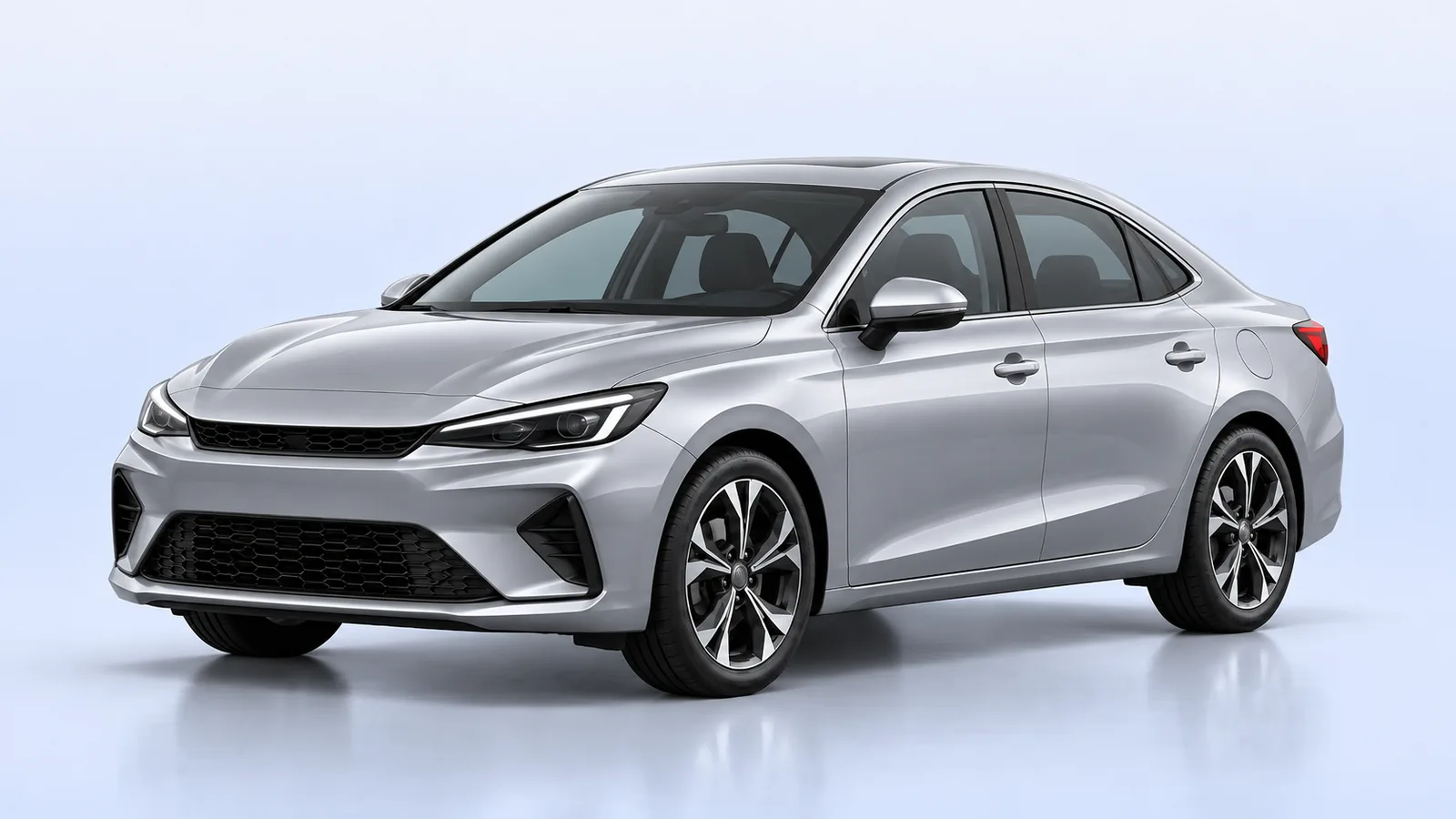
O 2016 Hyundai Elantra veio com 2 motores: 1.8 L 4-cilindro, 2.0 L 4-cilindro. Faz 11.5 a 13.2 km/l combinado dependendo do motor, segundo a EPA. NHTSA NCAP classifica em 5 de 5 estrelas. 2 campanhas de recall e 293 reclamações de proprietários estão registradas.
Especificações
| Cilindros | 4 |
|---|---|
| Câmbio | Automático · 6 marchas |
| Tração | Dianteira (FWD) |
| Dimensões (C × L × A) | 4,420 × 1,780 × 1,450 mm (174.0 × 70.1 × 57.1 in) |
| Distância entre eixos | 2,670 mm (105.1 in) |
| Peso bruto | 1,300 kg (2,866 lb) |
| Carroceria | Carros de Médio Porte |
Dimensões e peso: mediana das 2 versões nas especificações oficiais do Canadá (NHTSA vPIC). Cada versão difere ligeiramente.
À venda em Estados Unidos
Outros carros Hyundai à venda em Estados Unidos
Segurança
Resultados de testes de colisão por mercado. Podem variar conforme versão e equipamento.
Economia de combustível (MPG)
🇺🇸 Dado localPor versão
| Motor | Câmbio | Tração | Cidade | Estrada | Misto |
|---|---|---|---|---|---|
| 1.8 L 4-cilindro | Automático · 6 marchas | Dianteira (FWD) | 11.5 km/l (27 MPG) | 15.4 km/l (36 MPG) | 12.8 km/l (30 MPG) |
| 1.8 L 4-cilindro | Automático · 6 marchas | Dianteira (FWD) | 11.9 km/l (28 MPG) | 15.6 km/l (37 MPG) | 13.2 km/l (31 MPG) |
| 1.8 L 4-cilindro | Manual · 6 marchas | Dianteira (FWD) | 11.5 km/l (27 MPG) | 15.4 km/l (36 MPG) | 12.8 km/l (30 MPG) |
| 2.0 L 4-cilindro | Automático · 6 marchas | Dianteira (FWD) | 10.2 km/l (24 MPG) | 13.5 km/l (32 MPG) | 11.5 km/l (27 MPG) |
| 2.0 L 4-cilindro | Automático · 6 marchas | Dianteira (FWD) | 10.2 km/l (24 MPG) | 14.9 km/l (35 MPG) | 11.9 km/l (28 MPG) |
| 2.0 L 4-cilindro | Manual · 6 marchas | Dianteira (FWD) | 10.2 km/l (24 MPG) | 13.5 km/l (32 MPG) | 11.5 km/l (27 MPG) |
| 2.0 L 4-cilindro | Manual · 6 marchas | Dianteira (FWD) | 10.2 km/l (24 MPG) | 14.5 km/l (34 MPG) | 11.9 km/l (28 MPG) |
Dados da EPA para cada versão vendida nos EUA.
Chamadas de retorno
Consequência · Solução
An air bag inflator that ruptures may result in sharp metal fragments striking the driver or passengers, increasing the risk of injury or death.
Dealers will inspect and replace the air bag inflator, as necessary, free of charge. Interim notification letters, notifying owners of the safety risk, were mailed July 3, 2026. Additional letters will be sent once the final remedy is available, anticipated August, 2026. Owners may contact Hyundai customer service at 1-855-371-9460. Hyundai's number for this recall is 300. Vehicle Identification Numbers (VINs) involved in this recall became searchable on NHTSA.gov on May 16, 2026.
Consequência · Solução
A person inside the trunk compartment may become trapped, increasing their risk of injury.
Dealers will replace the trunk latch base sub-assembly, free of charge. Owner notification letters were mailed April 5, 2024. Owners may contact Hyundai customer service at 1-855-371-9460. Hyundai's number for this recall is 256.
Pode não se aplicar aos veículos vendidos no seu país. Verifique com seu VIN na fonte.
Detalhes
Issue: On certain vehicles, the driver-front airbag inflator could rupture when the airbag deploys in a crash. If this happens, the airbag may not fully inflate and fragments could be propelled toward vehicle occupants. Safety Risk: An airbag inflator that ruptures can create a risk of injury or death. Corrective Actions: Hyundai will notify owners in writing and advise you to take your vehicle to a dealership to inspect and, if necessary, replace the driver-front airbag inflator.
Detalhes
Issue: On certain vehicles, a part in the trunk release latch could fail. If this happens, the emergency trunk release located inside the trunk may not work properly. This could prevent a person that is trapped inside the trunk from opening it. Safety Risk: If a person is closed inside the trunk compartment, they may not be able to get out. This could create a risk of injury. Corrective Actions: Hyundai will notify owners by mail and advise you to take your vehicle to a dealership to replace the trunk latch assembly.
Detalhes
Issue: Hyundai is conducting a special service campaign that provides anti-corrosion treatment to certain underbody components. Over time, components under the vehicle, including brake lines could corrode. If this happens, a brake line could fail and leak. A brake fluid leak can result in reduced braking. Safety Risk: Reduced braking can cause an extended stopping distance and increase the risk of a crash. Corrective Actions: Hyundai will notify owners by mail and advise you to take your vehicle to a dealership to inspect the underbody, including the brake lines. The dealer will apply an anti-corrosion treatment to certain parts, and replace the brake lines if necessary.
Detalhes
Issue: Hyundai Auto Canada is conducting a Product Improvement Campaign that provides an update to the engine control module to detect potential problems before an engine fails. An engine failure would cause a sudden loss of power with an inability to restart. Note: This only affects certain vehicles equipped with a 2.0 L Nu GDI engine. For the Sonata model, only the Sonata Hybrid and Plug-In Hybrid (PHEV) models are affected by this campaign. This is an expansion of R0180 (Transport Canada #2021-575). Any vehicle that received a software update under campaign R0180 does not require this update. Safety Risk: A sudden loss of engine power could increase the risk of an accident. An engine failure could also create the risk of a fire. Corrective Actions: Hyundai will notify owners by mail and advise you to take your vehicle to a dealer to update the software for the engine control module. Note: Hyundai recommends that you should always follow the correct vehicle maintenance schedule, which is printed in the Owner's Manual. If you experience unusual engine noise, reduced power, or a check engine/oil warning light, Hyundai advises you to immediately visit a Hyundai dealership to have your vehicle diagnosed.
Detalhes
This recall was replaced by Transport Canada Recall No. 2022-244. Issue: Hyundai Auto Canada is conducting a Product Improvement Campaign that provides an update to the engine control module to detect potential problems before an engine fails. An engine failure would cause a sudden loss of power with an inability to restart. Note: This only affects certain vehicles equipped with a 2.0 L Nu GDI engine. For the Sonata model, only the Sonata Hybrid and Plug-In Hybrid (PHEV) models are affected by this campaign. All vehicles previously included in TC # 2021-034 are now part of this new campaign. Safety Risk: A sudden loss of engine power could increase the risk of an accident. An engine failure could also create the risk of a fire. Corrective Actions: Hyundai will notify owners by mail and advise you to take your vehicle to a dealer to update the software for the engine control module. Note: Hyundai recommends that you should always follow the correct vehicle maintenance schedule, which is printed in the Owner's Manual. If you experience unusual engine noise, reduced power, or a check engine/oil warning light, Hyundai advises you to immediately visit a Hyundai dealership to have your vehicle diagnosed.
Detalhes
This campaign was replaced by Transport Canada No. 2021-575. Issue: Hyundai Auto Canada is conducting a Product Improvement Campaign that provides an update to the engine control module to detect potential problems before an engine fails. An engine failure would cause a sudden loss of power with an inability to restart. Note: This only affects vehicles equipped with a 2.0 L Nu engine. For the Sonata model, only the Sonata Hybrid is affected by this campaign. Safety Risk: A sudden loss of engine power could increase the risk of an accident. An engine failure could also create the risk of a fire. Corrective Actions: The company will notify owners by mail. Owners will be instructed to take their vehicle to a dealer to update the software for the engine control module. Note: Hyundai recommends that you should always follow the correct vehicle maintenance schedule, which is printed in the Owner's Manual. If you experience unusual engine noise, reduced power, or a check engine/oil warning light, Hyundai advises you to immediately visit a Hyundai dealership to have your vehicle diagnosed.
Detalhes
Issue: This recall is for aftermarket replacement rear window glass produced by Vitro Automotriz. Certain rear window glass may not have been properly tempered. If the window breaks, the glass may separate into large pieces instead of very small ones. Note: This is a voluntary recall that is not being conducted under the requirements of the Motor Vehicle Safety Act. Safety Risk: Glass that breaks in to large pieces could create a risk of injury. Corrective Actions: The company will notify consumers by mail and instruct them to inspect the designation code marked on the rear window glass. Products affected by this recall have the designation “DOT 287” along with the lettering “VMR” (Replacement Market) and a date code that is before July 2019. This information is printed on the bottom corner of the glass. Consumers should contact Vitro's customer service at 1-412-995-6457 or argbacklites@vitro.com to arrange for replacement of the glass.
Detalhes
Certain vehicles may not comply with Canadian Motor Vehicle Safety Regulations. The compliance label may not contain any information about the rear Gross Axle Weight Rating (GAWR). If the vehicle is loaded beyond its allowable rear GAWR, it could affect vehicle handling increasing the risk of a crash causing injury and/or damage to property. Correction: Dealers will apply revised labels.
Problemas comuns
293 relatos🇺🇸 Dado localRelatado por donos à fonte abaixo. Não é um veredito sobre este carro: é o que as pessoas escreveram.
I am reporting a recall remedy failure involving my 2016 Hyundai Elantra under Hyundai Recall 256 / NHTSA Recall 24V‑146 (trunk latch pawl defect). The McCarthy Olathe Hyundai dealership in Olathe, KS marked the recall as “completed,” but the trunk latch still does not open and the defect persists exactly as described…
Vehicle stalls while driving which is very dangerous. All dashboard lights go on prior to stalling. No engine light is on. Knocking sound coming from engine. Dealer states engine needs to be replaced. Car has been serviced regularly despite that Hyundai denies engine replacement. The knocking sound that engine does is…
The motor started to make a ticking noise 5 months earlier. 5 months later at 180,000 miles a borascope finding, reveled all 4 cylinder walls were worn related to cylinder slap. Called Hyundai dealership and was told ithe car is too old and the milage too high for a warranty coverage.
P0420 P0441 P0014 P1326 C1260 C1688 C2130 These are the codes that's affecting my car
Engine burned oil and had knocking sound, despite having regular oil changes. Stalked out while driving took to dealer initial said it was covered by the exerted coverage but ultimately denied. It had 111,000 miles on it. I believe this engine has the same issues as the others.
The oil light & check engine started flashing. Took it to the auto shop. The mechanic stated that the oil level is very low and the engine has a bad lower-end knock. Removed the oil filter and found metal debris in the oil. No oil leaks were found under the vehicle at all. Oil is being burned out through the exha…
Transmission P0731 code. Vehicle will not shift into 1st gear when idle but will stay in 3 or 4 gear. Speedometer would indicate high speed when pressing on accelerator. At traffic light when light turn green car rev but would not shift into gear. Has only 130K miles. Car was towed to dealer and required a new trans…
2016 Hyundai Elantra (75k miles) experiences severe, un-commanded Loss of Propulsive Power and a Severe Drivetrain Instability Hazard. At steady highway speeds, the automatic transmission completely loses hydraulic pressure, slips out of gear, and unexpectedly drops into a temporary "neutral." The engine suddenly revs…
My driver side window has not been working for almost 3 years now. I have taken it to 4 mechanics and they fix it but only last a couple days. They have all say they can’t really do anything about it since they need an original piece. My AC is another issue I have that I have tried fixing 3 times now. The same issue h…
The vehicle's security system malfunctioned immediately after service at Parks Hyundai of Gainesville on 05/27/26 for Recall 256 & Campaign P33. The alarm blares & emergency lights flash while I am driving on public roads. This defect first presented in the dealership parking lot upon pickup. This creates a severe saf…
The car turns off while driving it without warning or anything. Place where I got it don’t want to fix it
Car randomly will not start or will start but have no RPM's. Last year showed a crank shaft sensor code and had it replaced but car is doing it again.
2016 vs. outros anos Elantra
🇺🇸 Dado localReclamações de proprietários e campanhas de recall registradas na NHTSA para cada ano do modelo. Menos reclamações também podem significar menos carros vendidos ou um carro mais novo.
Perguntas
- Qual motor tem o 2016 Hyundai Elantra?
- O 2016 Hyundai Elantra veio com 2 motores: 1.8 L 4-cilindro, 2.0 L 4-cilindro.
- Qual é a economia de combustível do 2016 Hyundai Elantra?
- Faz 11.5 a 13.2 km/l combinado dependendo do motor, segundo a EPA.
- O 2016 Hyundai Elantra é seguro?
- NHTSA NCAP classifica em 5 de 5 estrelas.
- O 2016 Hyundai Elantra tem campanhas de recall?
- 2 campanhas de recall estão registradas. A mais recente envolve Air bags (2026-05-15).
- Quais são os problemas comuns do 2016 Hyundai Elantra?
- 293 proprietários apresentaram reclamações, com mais frequência sobre motor.
Outros anos
Outros modelos da Hyundai
Você possui um 2016 Elantra?
Publique-o gratuitamente e alcance compradores que já estão interessados neste carro exato.
- Gratuito, sem comissão
- Cerca de três minutos
- Seu anúncio aparece nesta página