Hyundai Elantra 2015
O 2015 Hyundai Elantra veio com 2 motores: 1.8 L 4-cilindro, 2.0 L 4-cilindro. Faz 11.5 a 13.2 km/l combinado dependendo do motor, segundo a EPA. NHTSA NCAP classifica em 5 de 5 estrelas. 3 campanhas de recall e 262 reclamações de proprietários estão registradas.
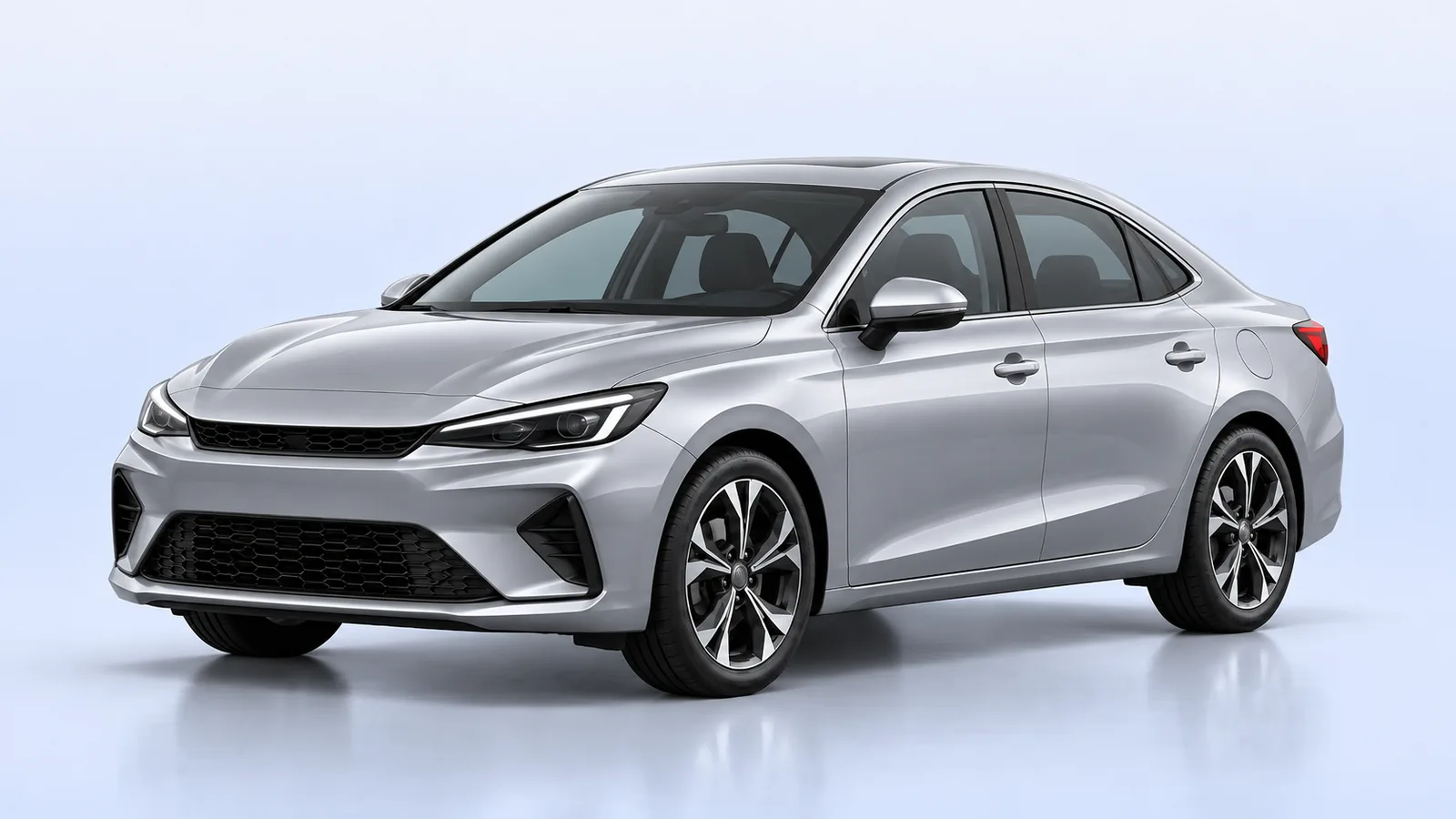
Especificações
| Cilindros | 4 |
|---|---|
| Câmbio | Automático · 6 marchas |
| Tração | Dianteira (FWD) |
| Dimensões (C × L × A) | 4,540 × 1,780 × 1,450 mm (178.7 × 70.1 × 57.1 in) |
| Distância entre eixos | 2,700 mm (106.3 in) |
| Peso bruto | 1,295 kg (2,855 lb) |
| Carroceria | Carros de Médio Porte |
Dimensões e peso: mediana das 3 versões nas especificações oficiais do Canadá (NHTSA vPIC). Cada versão difere ligeiramente.
À venda em Estados Unidos
Outros carros Hyundai à venda em Estados Unidos
Segurança
Resultados de testes de colisão por mercado. Podem variar conforme versão e equipamento.
Economia de combustível (MPG)
🇺🇸 Dado localPor versão
| Motor | Câmbio | Tração | Cidade | Estrada | Misto |
|---|---|---|---|---|---|
| 1.8 L 4-cilindro | Automático · 6 marchas | Dianteira (FWD) | 11.5 km/l (27 MPG) | 15.6 km/l (37 MPG) | 13.2 km/l (31 MPG) |
| 1.8 L 4-cilindro | Automático · 6 marchas | Dianteira (FWD) | 11.5 km/l (27 MPG) | 15.4 km/l (36 MPG) | 12.8 km/l (30 MPG) |
| 1.8 L 4-cilindro | Manual · 6 marchas | Dianteira (FWD) | 11.5 km/l (27 MPG) | 15.4 km/l (36 MPG) | 12.8 km/l (30 MPG) |
| 2.0 L 4-cilindro | Automático · 6 marchas | Dianteira (FWD) | 10.2 km/l (24 MPG) | 14.9 km/l (35 MPG) | 11.9 km/l (28 MPG) |
| 2.0 L 4-cilindro | Automático · 6 marchas | Dianteira (FWD) | 10.2 km/l (24 MPG) | 14.5 km/l (34 MPG) | 11.9 km/l (28 MPG) |
| 2.0 L 4-cilindro | Automático · 6 marchas | Dianteira (FWD) | 10.2 km/l (24 MPG) | 13.5 km/l (32 MPG) | 11.5 km/l (27 MPG) |
| 2.0 L 4-cilindro | Manual · 6 marchas | Dianteira (FWD) | 10.2 km/l (24 MPG) | 14.5 km/l (34 MPG) | 11.9 km/l (28 MPG) |
| 2.0 L 4-cilindro | Manual · 6 marchas | Dianteira (FWD) | 9.8 km/l (23 MPG) | 14.5 km/l (34 MPG) | 11.5 km/l (27 MPG) |
| 2.0 L 4-cilindro | Manual · 6 marchas | Dianteira (FWD) | 10.2 km/l (24 MPG) | 14.1 km/l (33 MPG) | 11.5 km/l (27 MPG) |
Dados da EPA para cada versão vendida nos EUA.
Chamadas de retorno
Consequência · Solução
An air bag inflator that ruptures may result in sharp metal fragments striking the driver or passengers, increasing the risk of injury or death.
Dealers will inspect and replace the air bag inflator, as necessary, free of charge. Interim notification letters, notifying owners of the safety risk, were mailed July 3, 2026. Additional letters will be sent once the final remedy is available, anticipated August, 2026. Owners may contact Hyundai customer service at 1-855-371-9460. Hyundai's number for this recall is 300. Vehicle Identification Numbers (VINs) involved in this recall became searchable on NHTSA.gov on May 16, 2026.
Consequência · Solução
A person inside the trunk compartment may become trapped, increasing their risk of injury.
Dealers will replace the trunk latch base sub-assembly, free of charge. Owner notification letters were mailed April 5, 2024. Owners may contact Hyundai customer service at 1-855-371-9460. Hyundai's number for this recall is 256.
Consequência · Solução
An engine compartment fire while parked or driving can increase the risk of injury.
Owners are advised to park outside and away from structures until the recall repair is complete. Dealers will replace the ABS fuse, free of charge. Owner notification letters were mailed April 10, 2024 through October 11, 2024. Owners may contact Hyundai customer service at 1-855-371-9460. Hyundai's number for this recall is 251.
Pode não se aplicar aos veículos vendidos no seu país. Verifique com seu VIN na fonte.
Detalhes
Issue: On certain vehicles, the driver-front airbag inflator could rupture when the airbag deploys in a crash. If this happens, the airbag may not fully inflate and fragments could be propelled toward vehicle occupants. Safety Risk: An airbag inflator that ruptures can create a risk of injury or death. Corrective Actions: Hyundai will notify owners in writing and advise you to take your vehicle to a dealership to inspect and, if necessary, replace the driver-front airbag inflator.
Detalhes
Issue: On certain vehicles, a part in the trunk release latch could fail. If this happens, the emergency trunk release located inside the trunk may not work properly. This could prevent a person that is trapped inside the trunk from opening it. Safety Risk: If a person is closed inside the trunk compartment, they may not be able to get out. This could create a risk of injury. Corrective Actions: Hyundai will notify owners by mail and advise you to take your vehicle to a dealership to replace the trunk latch assembly.
Detalhes
Issue: On certain vehicles, brake fluid could leak into the control module for the antilock brake system (ABS) and cause it to short circuit. Note: This recall replaces recall R0246 (Transport Canada recall number 2023-527). For the Sonata model, only the Sonata Hybrid model is affected by this recall. Safety Risk: A short circuit could create a fire risk, even while the vehicle is parked and turned off. Corrective Actions: Hyundai will notify owners by mail and advise you to take your vehicle to a dealership to replace the fuse for the ABS module. Hyundai recommends that you should park your vehicle outdoors and away from other vehicles or structures until the recall repairs have been completed.
Detalhes
This recall was replaced by Transport Canada Recall No. 2024-080. Issue: On certain vehicles, brake fluid could leak into the control module for the antilock brake system (ABS) and cause it to short circuit. Safety Risk: A short circuit could create a fire risk, even while the vehicle is parked and turned off. Corrective Actions: Hyundai will notify owners by mail and advise you to take your vehicle to a dealership to replace the fuse for the ABS module. Hyundai recommends that you should park your vehicle outdoors and away from other vehicles or structures until the recall repairs have been completed.
Detalhes
Issue: Hyundai is conducting a special service campaign that provides anti-corrosion treatment to certain underbody components. Over time, components under the vehicle, including brake lines could corrode. If this happens, a brake line could fail and leak. A brake fluid leak can result in reduced braking. Safety Risk: Reduced braking can cause an extended stopping distance and increase the risk of a crash. Corrective Actions: Hyundai will notify owners by mail and advise you to take your vehicle to a dealership to inspect the underbody, including the brake lines. The dealer will apply an anti-corrosion treatment to certain parts, and replace the brake lines if necessary.
Detalhes
Issue: Hyundai Auto Canada is conducting a Product Improvement Campaign that provides an update to the engine control module to detect potential problems before an engine fails. An engine failure would cause a sudden loss of power with an inability to restart. Note: This only affects certain vehicles equipped with a 2.0 L Nu GDI engine. For the Sonata model, only the Sonata Hybrid and Plug-In Hybrid (PHEV) models are affected by this campaign. This is an expansion of R0180 (Transport Canada #2021-575). Any vehicle that received a software update under campaign R0180 does not require this update. Safety Risk: A sudden loss of engine power could increase the risk of an accident. An engine failure could also create the risk of a fire. Corrective Actions: Hyundai will notify owners by mail and advise you to take your vehicle to a dealer to update the software for the engine control module. Note: Hyundai recommends that you should always follow the correct vehicle maintenance schedule, which is printed in the Owner's Manual. If you experience unusual engine noise, reduced power, or a check engine/oil warning light, Hyundai advises you to immediately visit a Hyundai dealership to have your vehicle diagnosed.
Detalhes
This recall was replaced by Transport Canada Recall No. 2022-244. Issue: Hyundai Auto Canada is conducting a Product Improvement Campaign that provides an update to the engine control module to detect potential problems before an engine fails. An engine failure would cause a sudden loss of power with an inability to restart. Note: This only affects certain vehicles equipped with a 2.0 L Nu GDI engine. For the Sonata model, only the Sonata Hybrid and Plug-In Hybrid (PHEV) models are affected by this campaign. All vehicles previously included in TC # 2021-034 are now part of this new campaign. Safety Risk: A sudden loss of engine power could increase the risk of an accident. An engine failure could also create the risk of a fire. Corrective Actions: Hyundai will notify owners by mail and advise you to take your vehicle to a dealer to update the software for the engine control module. Note: Hyundai recommends that you should always follow the correct vehicle maintenance schedule, which is printed in the Owner's Manual. If you experience unusual engine noise, reduced power, or a check engine/oil warning light, Hyundai advises you to immediately visit a Hyundai dealership to have your vehicle diagnosed.
Detalhes
This campaign was replaced by Transport Canada No. 2021-575. Issue: Hyundai Auto Canada is conducting a Product Improvement Campaign that provides an update to the engine control module to detect potential problems before an engine fails. An engine failure would cause a sudden loss of power with an inability to restart. Note: This only affects vehicles equipped with a 2.0 L Nu engine. For the Sonata model, only the Sonata Hybrid is affected by this campaign. Safety Risk: A sudden loss of engine power could increase the risk of an accident. An engine failure could also create the risk of a fire. Corrective Actions: The company will notify owners by mail. Owners will be instructed to take their vehicle to a dealer to update the software for the engine control module. Note: Hyundai recommends that you should always follow the correct vehicle maintenance schedule, which is printed in the Owner's Manual. If you experience unusual engine noise, reduced power, or a check engine/oil warning light, Hyundai advises you to immediately visit a Hyundai dealership to have your vehicle diagnosed.
Detalhes
Issue: This recall is for aftermarket replacement rear window glass produced by Vitro Automotriz. Certain rear window glass may not have been properly tempered. If the window breaks, the glass may separate into large pieces instead of very small ones. Note: This is a voluntary recall that is not being conducted under the requirements of the Motor Vehicle Safety Act. Safety Risk: Glass that breaks in to large pieces could create a risk of injury. Corrective Actions: The company will notify consumers by mail and instruct them to inspect the designation code marked on the rear window glass. Products affected by this recall have the designation “DOT 287” along with the lettering “VMR” (Replacement Market) and a date code that is before July 2019. This information is printed on the bottom corner of the glass. Consumers should contact Vitro's customer service at 1-412-995-6457 or argbacklites@vitro.com to arrange for replacement of the glass.
Problemas comuns
262 relatos🇺🇸 Dado localRelatado por donos à fonte abaixo. Não é um veredito sobre este carro: é o que as pessoas escreveram.
The vehicle experienced severe, sudden loss of power while driving, leaving the car unable to exceed approximately 40 MPH on public roads and highways. This restriction creates an immediate rear-end collision hazard and severely degrades acceleration under traffic conditions. Diagnostic & Technical History: The vehicl…
I am writing to formally report a serious vehicle safety concern involving a 2015 Hyundai Elantra, VIN [XXX], which is owned by my mother. The vehicle experienced a sudden loss of power steering assistance, creating an immediate and significant safety concern. This could have caused a series issue to myself and othe…
Failed engine due to class action recall
I purchased the vehicle from a private party on 8/18/21 with 38,310 miles. Almost immediately after owning the vehicle I noticed the engine oil level was low.. The owner had said she had just got an oil change so I thought maybe the shop just left it low. Then I noticed it low again a month later, and that was the sta…
The engine failed on a 2015 Hyundai Elantra with approximately 71,000 miles. The vehicle has an open, unresolved safety recall (Recall 251, NHTSA #23V651000) for an ABS module brake fluid leak that Hyundai has acknowledged but has not provided a remedy for. The vehicle is currently at an independent repair facility an…
Odometer Fraud. The contact purchased a 2015 Hyundai Elantra. It was discovered that there was a mileage discrepancy. The vehicle was a dealer sale. At the time of purchase, the vehicle mileage was approximately 182,204 - 215,000; and at the time of registration, it was discovered that the mileage was 152,572.
I am submitting a vehicle safety complaint regarding a vehicle purchased on March 5, 2026. Within days of purchase, the vehicle exhibited multiple safety-related issues despite reportedly passing a Virginia safety inspection on February 27, 2026. The safety concerns identified include: - Driver-side headlight partiall…
The contact owns a 2015 Hyundai Elantra. The contact stated that while driving at an undisclosed speed, the vehicle lost motive power several times, with the check engine warning light and low oil warning lights blinking. The vehicle was able to restart; however, the failure persisted. There was an abnormal tapping so…
testung
Engine failure consistent with known Hyundai engine defect. Blue smoke, oil consumption, engine knock Mechanic autoscanned codes were P0300, PO301, PO302 Lost half quart of oil in 800 miles Fire risk acknowledged in recall documentation - undriveable car at Hyundai dealer in Salem NH, renting a car now as without any …
I was at a red light waiting to go an when it was time to go my car would not go. It was on it would not go into gear. It will reverse. It just won't go forward in auto or manual. Im the 1st owner of this car. I bought it new. I need Hyundai to take care of this problem. Asap please. It happened the car only has 133…
2015 Hyundai Elantra is consuming oil. I have changed the oil on all of my vehicles ever since I have owned vehicles and this vehicle purchased used for my children and maintained by me is consuming oil requiring addition of +/- a quart of oil between trips from Baltimore, MD to New Haven, CT. Oil lamp on dashboard is…
2015 vs. outros anos Elantra
🇺🇸 Dado localReclamações de proprietários e campanhas de recall registradas na NHTSA para cada ano do modelo. Menos reclamações também podem significar menos carros vendidos ou um carro mais novo.
Perguntas
- Qual motor tem o 2015 Hyundai Elantra?
- O 2015 Hyundai Elantra veio com 2 motores: 1.8 L 4-cilindro, 2.0 L 4-cilindro.
- Qual é a economia de combustível do 2015 Hyundai Elantra?
- Faz 11.5 a 13.2 km/l combinado dependendo do motor, segundo a EPA.
- O 2015 Hyundai Elantra é seguro?
- NHTSA NCAP classifica em 5 de 5 estrelas.
- O 2015 Hyundai Elantra tem campanhas de recall?
- 3 campanhas de recall estão registradas. A mais recente envolve Air bags (2026-05-15).
- Quais são os problemas comuns do 2015 Hyundai Elantra?
- 262 proprietários apresentaram reclamações, com mais frequência sobre motor.
Outros anos
Outros modelos da Hyundai
Você possui um 2015 Elantra?
Publique-o gratuitamente e alcance compradores que já estão interessados neste carro exato.
- Gratuito, sem comissão
- Cerca de três minutos
- Seu anúncio aparece nesta página