Honda CR-V 2004
El 2004 Honda CR-V tiene un motor de 2.4 L. Obtiene 8.9 km/l combinado (8.1 ciudad, 10.2 autopista), según la EPA. 13 campañas de retiro y 40 quejas de propietarios están registradas.
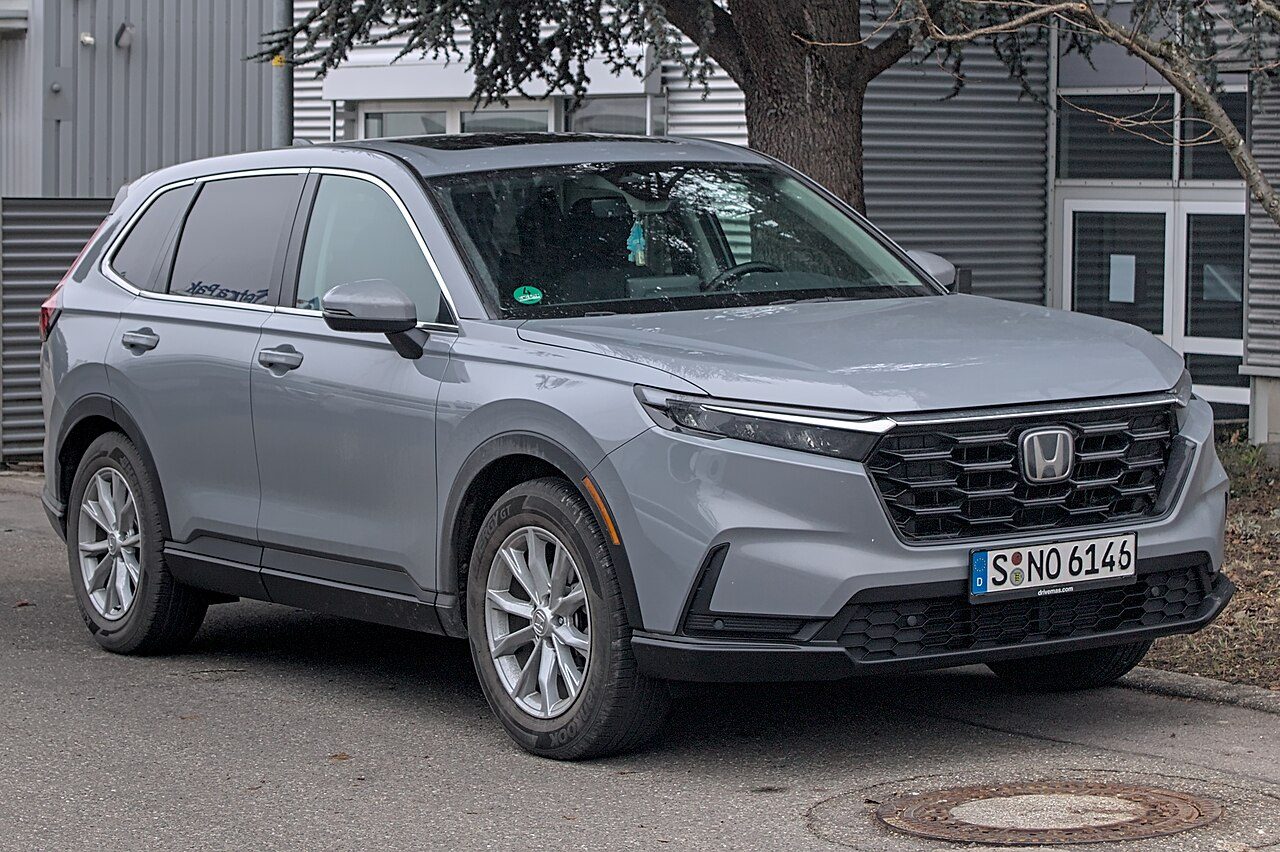
Especificaciones
| Cilindros | 4 |
|---|---|
| Transmisión | Automática · 4 velocidades |
| Tracción | AWD |
| Dimensiones (L × A × H) | 4,360 × 1,780 × 1,680 mm (171.7 × 70.1 × 66.1 in) |
| Distancia entre ejes | 2,630 mm (103.5 in) |
| Peso en vacío | 1,480 kg (3,263 lb) |
| Estilo de carrocería | Vehículo Utilitario Deportivo - 2WD |
Dimensiones y peso: especificaciones oficiales de Canadá (NHTSA vPIC).
A la venta en Estados Unidos
Seguridad
Resultados de pruebas de choque por mercado. Pueden variar según versión y equipamiento.
Economía de combustible (MPG)
🇺🇸 Dato localPor versión
| Motor | Transmisión | Tracción | Ciudad | Autopista | Mixto |
|---|---|---|---|---|---|
| 2.4 L 4-cilindro | Automática · 4 velocidades | AWD | 8.1 km/l (19 MPG) | 10.2 km/l (24 MPG) | 8.9 km/l (21 MPG) |
| 2.4 L 4-cilindro | Automática · 4 velocidades | Delantera (FWD) | 8.5 km/l (20 MPG) | 11.1 km/l (26 MPG) | 9.3 km/l (22 MPG) |
| 2.4 L 4-cilindro | Manual · 5 velocidades | AWD | 8.1 km/l (19 MPG) | 9.8 km/l (23 MPG) | 8.9 km/l (21 MPG) |
Cifras de la EPA para cada versión vendida en EE. UU.
Llamados a revisión
Traducción automática del texto oficial. El original está en la fuente.
Consecuencia · Remedio
Si el interruptor falla, podría sobrecalentarse y humear, aumentando el riesgo de un incendio.
Honda notificará a los propietarios, y los concesionarios reemplazarán el interruptor maestro de la ventana eléctrica e inspeccionarán el arnés de cableado en busca de daños, reemplazándolo si es necesario, sin costo alguno. El retiro comenzó el 29 de enero de 2021. Los propietarios pueden contactar el servicio al cliente de Honda al 1-888-234-2138. El número de Honda para este retiro es P9D.
Consecuencia · Remedio
Una explosión del inflador puede resultar en fragmentos de metal afilados golpeando al conductor u otros ocupantes, resultando en lesiones graves o muerte.
Honda notificará a los propietarios, y los concesionarios reemplazarán el inflador de la bolsa de aire frontal del conductor, sin costo alguno. El retiro comenzó el 12 de agosto de 2019. Los propietarios pueden contactar al servicio al cliente de Honda al 1-888-234-2138. Los números de Honda para este retiro son Q5A y Y58.
Consecuencia · Remedio
Una explosión del inflador puede resultar en fragmentos de metal afilados golpeando al conductor u otros ocupantes, resultando en lesiones graves o muerte.
Honda notificará a los propietarios, y los concesionarios reemplazarán el inflador del airbag frontal del pasajero, sin costo alguno. El retiro comenzó el 12 de agosto de 2019. Los propietarios pueden contactar el servicio al cliente de Honda al 1-888-234-2138. Los números de Honda para este retiro son E5D y X5C.
Consecuencia · Remedio
Una explosión de un inflador dentro del módulo del airbag frontal del conductor puede resultar en fragmentos de metal afilados golpeando al conductor, al pasajero del asiento delantero u otros ocupantes, resultando en lesiones graves o muerte.
Honda notificará a los propietarios, y los concesionarios reemplazarán el inflador del airbag del conductor con un inflador alternativo, sin cargo. El recall comenzó el 10 de abril de 2019. Los propietarios de Honda pueden contactar al servicio al cliente al 1-888-234-2138. El número de Honda para este recall es O41. Los propietarios de Acura pueden contactar al servicio al cliente al 1-888-234-2138. El número de Acura para este recall es U40.
Consecuencia · Remedio
Un airbag instalado incorrectamente puede desplegarse de manera inapropiada en caso de un choque, aumentando el riesgo de lesión.
Honda notificará a los propietarios, y los concesionarios inspeccionarán y, si es necesario, reemplazarán el ensamblaje del módulo del airbag frontal del pasajero, sin cargo. El retiro comenzó el 22 de junio de 2018. Los propietarios pueden contactar al servicio al cliente de Honda al 1-888-234-2138. Los números de Honda para este retiro son K1P y M1O.
Consecuencia · Remedio
En caso de un accidente que requiera el despliegue del airbag frontal del pasajero, el inflador podría romperse con fragmentos metálicos que impacten al ocupante del asiento del pasajero u otros ocupantes, posiblemente causando lesiones graves o la muerte.
Honda notificará a los propietarios, y los concesionarios reemplazarán el inflador del airbag del pasajero, sin costo alguno. El retiro comenzó el 1 de julio de 2015. Los propietarios pueden contactar el servicio al cliente de Honda al 1-888-234-2138. Los números de Honda para este retiro son JU4, JU5, JU6 y JU7. Nota: Los vehículos que ya han recibido un inflador de airbag del pasajero como parte de la solución de retiro de una campaña anterior, como 14V353 o 14V700 (números de retiro de Honda S95, JH6, JH7, JH8, JH9, JJ0, JJ1, JJ2, JJ6, JM5 y JM6) no están incluidos en este retiro. Sin embargo, este retiro anula 13V132 y 14V349. Nota: El 18 de diciembre de 2015, Honda informó a la NHTSA de una expansión de este retiro para incluir ciertos vehículos Honda CR-V del año modelo 2004, además de vehículos CR-V del año modelo 2003 adicionales.
Consecuencia · Remedio
En caso de un accidente que requiera el despliegue del airbag frontal del conductor, el inflador podría romperse con fragmentos metálicos que impacten al conductor u otros ocupantes, resultando en lesiones graves o la muerte.
Honda notificará a los propietarios, y los concesionarios reemplazarán el inflador de la bolsa de aire frontal del conductor, sin costo alguno. El retiro comenzó el 1 de julio de 2015. Los propietarios pueden contactar al servicio al cliente de Honda al 1-888-234-2138. Los propietarios pueden contactar al servicio al cliente de Acura al 1-800-382-2238, seleccionando la opción 4. Nota: Los vehículos que hayan tenido su bolsa de aire frontal del conductor reemplazada previamente como parte de un remedio de retiro antes del 12 de septiembre de 2014 deben reemplazar su bolsa de aire bajo este retiro también. Los vehículos que, a partir del 12 de septiembre de 2014, recibieron un remedio por un retiro previo de inflador de bolsa de aire frontal del conductor ya recibieron un inflador de un diseño diferente, y por lo tanto no están incluidos en este retiro y no requieren servicio adicional. Nota: Este retiro reemplaza completamente los retiros 08V-593, 09V-259, 10V-041, 11V-260, 14V-351 y 15V-153. Los números de Honda para este retiro son JQ9, JR0, JR1, JR2, JR3, JR4, JR5, JR6, JR7 y JR8.
Consecuencia · Remedio
En caso de un accidente que requiera el despliegue del airbag frontal del pasajero, el inflador podría romperse con fragmentos metálicos que impacten a los ocupantes del vehículo, lo que podría resultar en lesiones graves o la muerte.
Honda notificará a los propietarios, y los concesionarios reemplazarán el inflador del airbag del lado del pasajero, sin costo alguno. El retiro comenzó el 26 de enero de 2015. Los propietarios pueden contactar el servicio al cliente de Honda al 1-800-999-1009.
Consecuencia · Remedio
En caso de un accidente que requiera el despliegue del airbag frontal del pasajero, el inflador podría romperse con fragmentos metálicos que impacten a los ocupantes del vehículo, lo que podría resultar en lesiones graves o la muerte.
Honda notificará a los propietarios, y los concesionarios reemplazarán los infladores en todos los vehículos afectados, sin cargo. Se espera que el recall comience en agosto de 2014. Los propietarios pueden contactar al servicio al cliente de Honda al 1-800-999-1009.
Consecuencia · Remedio
Si el interruptor falla, podría sobrecalentarse, humear y causar un incendio. Una falla del interruptor y un incendio podrían ocurrir incluso si el vehículo no está en uso. Como precaución, se aconseja a los propietarios que estacionen afuera hasta que se haya realizado la reparación del retiro.
Honda notificará a los propietarios, y los concesionarios inspeccionarán y repararán los interruptores, según sea necesario, sin cargo. El retiro de seguridad comenzó el 2 de noviembre de 2012. Los propietarios pueden contactar a Honda al 1-800-999-1009.
Consecuencia · Remedio
SI LOS EXTREMOS DEL TERMINAL SE FUNDEN DENTRO DEL CONECTOR DEL ARNESES ELÉCTRICO, LOS FAROS DE LUZ BAJA PUEDEN QUEDAR INOPERATIVOS, REDUCIENDO LA VISIBILIDAD DEL CONDUCTOR Y AUMENTANDO EL RIESGO DE UN ACCIDENTE.
HONDA NOTIFICARÁ A LOS PROPIETARIOS, Y LOS CONCESIONARIOS REPARARÁN EL ARNES DEL TERMINAL DE LAS LUCES BAJAS O REEMPLAZARÁN EL INTERRUPTOR DE ILUMINACIÓN SEGÚN SEA NECESARIO, SIN CARGO. EL RETIRO ORIGINAL COMENZÓ EN ABRIL DE 2012. LOS PROPIETARIOS DE VEHÍCULOS INVOLUCRADOS EN LA EXPANSIÓN DE SEPTIEMBRE DE 2012 SERÁN NOTIFICADOS EN SEPTIEMBRE DE 2012. LOS PROPIETARIOS PUEDEN CONTACTAR AL SERVICIO AL CLIENTE DE HONDA AL 1-800-999-1009.
Consecuencia · Remedio
EN CASO DE UN ACCIDENTE DEL VEHÍCULO, EL(S) OCUPANTE(S) PUEDEN RESULTAR SERIAMENTE LESIONADOS POR VIDRIOS ROTOS.
SAFELITE NOTIFICARÁ A SUS CLIENTES DEL RETAIL Y REEMPLAZARÁ EL VIDRIO SIN CARGO. LOS CLIENTES DEL RETAIL PUEDEN CONTACTAR A SAFELITE SIN CARGO AL 1-888-843-2906. SAFELITE NOTIFICARÁ A SUS CLIENTES DEL MAYORISTA Y REEMBOLSARÁ A LOS CLIENTES DEL MAYORISTA POR EL INVENTARIO ACTUAL Y A UNA TARIFA ESPECIFICADA POR REEMPLAZAR EL VIDRIO DE SUS CLIENTES. LOS CLIENTES DEL MAYORISTA PUEDEN CONTACTAR A LA DIVISIÓN DEL MAYORISTA DE SAFELITE, SERVICE AUTOGLASS, SIN CARGO AL 1-888-246-6298. EL RETIRO COMENZÓ EL 15 DE ENERO DE 2008.
Consecuencia · Remedio
EN CASO DE UN ACCIDENTE, LA TASA DE INFLACIÓN DEL AIRBAG SERÍA INCORRECTA, LO QUE PODRÍA AUMENTAR EL RIESGO DE LESIONES PARA EL CONDUCTOR.
LOS DISTRIBUIDORES REPARARÁN EL CABLEADO. LA NOTIFICACIÓN A LOS PROPIETARIOS COMENZÓ EL 16 DE JUNIO DE 2004. LOS PROPIETARIOS DEBEN CONTACTAR A HONDA AL 1-800-999-1009.
Traducción automática del texto oficial. El original está en la fuente.
Puede no aplicar a los vehículos vendidos en tu país. Verifica con tu VIN en la fuente.
Detalles
Issue: On certain vehicles, long-term exposure to high absolute humidity and temperature, combined with high temperature cycling, may eventually degrade the propellant contained in the airbag. This could cause the airbag to deploy with more force than normal. If the airbag inflator ruptures, fragments could be propelled toward vehicle occupants or cause damage to the airbag assembly, preventing its proper function. Note: This is a new recall campaign that includes vehicles that had an airbag inflator replaced under a previous recall or had a replacement airbag installed. The previous recall provided an interim (short-term) repair. Interim repair parts must be replaced with the final repair parts provided in this recall. Safety Risk: If the vehicle is involved in a crash requiring an airbag deployment, the airbag inflator could rupture and create a risk of injury. Corrective Action: Owners will be notified by mail and instructed to take their vehicle to a dealer to replace the driver and/or passenger-front airbag inflator. Note: The Canadian climate results in the propellant degrading slowly. This recall is being conducted as a precaution to address future risk. It is expected that all airbag inflators will be replaced before their function would be affected.
Detalles
Issue: On certain vehicles, there could be a problem with the driver-front airbag inflator. This could cause the airbag to deploy with more force than normal. If the airbag inflator ruptures, pieces could be propelled toward the occupants. This could also cause damage to the airbag assembly and prevent it from inflating properly. Note: This recall only affects certain vehicles that had a Takata airbag inflator installed during a previous airbag recall or collision repair. Safety Risk: In a crash where the airbag deploys, there could be an increased risk of injury. Corrective Action: The company will notify owners by mail. Owners will be instructed to take their vehicle to a dealer to have the driver-front airbag inflator replaced.
Detalles
On certain vehicles, the passenger frontal airbag inflator could produce excessive internal pressure during airbag deployment. Increased pressure may cause the inflator to rupture, which could allow fragments to be propelled toward vehicle occupants, increasing the risk of injury. This could also damage the airbag module, which could prevent proper deployment. Failure of the passenger airbag to fully deploy during a crash (where deployment is warranted) could increase the risk of personal injury to the seat occupant. Correction: Dealers will replace airbag inflator. Note: Note: This is an expansion of recall 2015-261. Honda Canada has created a special Airbag Inflator Hotline for immediate assistance. For more information, please contact: For Honda Owners: 1-877-445-7754 For Acura Owners: 1-877-445-9844
Detalles
On certain vehicles, the driver frontal airbag inflator could produce excessive internal pressure during airbag deployment. Increased pressure may cause the inflator to rupture, which could allow fragments to be propelled toward vehicle occupants, increasing the risk of injury. This could also damage the airbag module, which could prevent proper deployment. Failure of the airbag to fully deploy during a crash (where deployment is warranted) could increase the risk of personal injury to the seat occupant. Note: This recall supersedes special service campaign 2014567. Correction: Dealers will inspect/replace the driver's frontal airbag inflator. All vehicles having received a replacement inflator as part of any previous driver's inflator campaign will have a replacement inflator installed. Note: Honda Canada has created a special Airbag Inflator Hotline for immediate assistance. For more information, please contact: For Honda Owners: 1-877-445-7754 For Acura Owners: 1-877-445-9844
Detalles
Honda Canada is conducting a voluntary Safety Improvement Campaign concerning the driver's airbag inflator on certain vehicles equipped with Takata airbags. Honda will replace the driver's inflator on affected vehicles. This action is not being conducted under the requirements of the Motor Vehicle Safety Act. Note: This special service campaign was replaced by recall 2015225. Please see recall 2015225 for more information: <a href="http://wwwapps.tc.gc.ca/Saf-Sec-Sur/7/VRDB-BDRV/search-recherche/detail.aspx?lang=eng&&rn=2015225">Click here for more information</a>
En la carretera
Autos de este modelo registrados por primera vez en 2004, de registros oficiales. Cada cifra pertenece a su país.
🇳🇱 Registro de vehículos, Países Bajos
329 todavía registrado
22% con una llamada a revisión abierta
RDW, CC0
Problemas comunes
40 reportes🇺🇸 Dato localReportado por dueños a la fuente de abajo. No es un veredicto sobre este auto: es lo que la gente escribió.
The contact owns a 2004 Honda CR-V. The contact stated that while seated in the vehicle, there was smoke coming from the driver’s side door and the power window master switch was melted. The contact refenced NHTSA Campaign Number: 20V768000 (VISIBILITY, ELECTRICAL SYSTEM); however, the VIN was not included in the reca…
The contact owns a 2004 Honda CR-V. The contact stated that while driving at an undisclosed speed, the SRS warning light was illuminated. The vehicle was taken to the dealer; however, the vehicle was not inspected, diagnosed, or repaired. The contact stated that the SRS warning light remained illuminated. The manufact…
The contact purchased a 2004 Honda CR-V. The vehicle was a private sale on July 17, 2025. The contact stated that after obtaining the Carfax Report, the contact noticed that the previous odometer reading indicated that the mileage was 300,000. The contact stated that the seller's advertisement indicated that the vehic…
I own a 2004 Honda CR-V, a vehicle that has served me well over the years, but I recently faced a harrowing experience that left me quite shaken. While cruising along the highway, I was startled when the engine abruptly shut down. The ominous P1349 code indicated an issue with the Variable Timing Control (VTC) actuato…
The headlights on both sides, specifically the low beams, will almost randomly turn off for up to 30 seconds. I used to drive about 90 miles at night, and on the highway this is dangerous since the speed limit is 65mph. It’s a danger to other people on the road since it’s incredibly difficult to see with the headlight…
The contact owns a 2004 Honda CR-V. The contact stated that while rolling down the driver's side window, smoke briefly emanated from the window switch, prompting the contact to roll up the window, after which the window switch lost functionality. No warning lights were illuminated. The vehicle was not taken to the dea…
While cruising down a standard roadway around 40 mph, the passenger side/seat airbag randomly deployed for no apparent reason. The sound and shock of the airbag deployment nearly caused me to lose control the vehicle because it was so loud and unexpected.
While driving down the freeway at 6:00 AM in the morning, the headlights flashed on and then off intermittently. I thought nothing of it and then they went out completely and would not come back on right away. I was driving in complete darkness and thankfully the bright headlights still worked. After this incident,…
The rear trailing arm broke loose from the frame causing the wheel to twist back into the wheel well. It is now at my garage and could be inspected. This happened at about 45 miles per hour causing me to take evasive action so as not to cause an accident. There was no warning lamps affiliated with the suspension syste…
The contact owns a 2004 Honda CR-V. The contact stated that while attempting to restart the vehicle, the vehicle failed to start. The vehicle was towed to the residence. The contact related the failure to NHTSA Campaign Number: 12V573000 (Electrical System) however, neither the VIN nor the year, make, or model was inc…
The locking actuator gradually started going, where the locking knob would go down or up slowly as if it was stuck. Then one day the rear doors stopped working, then the front doors started to go. I have to unlock by key or manually inside the vehicle. Not only that though, I started having a weird not start situati…
The contact owns a 2004 Honda CR-V. The contact stated that after entering the vehicle, the power lock would not engage on the passenger’s side front door. The contact stated that the failure was intermittent however, had gradually become constant and all the door locks failed to operate as needed. The contact stated …
Preguntas
- ¿Qué motor tiene el 2004 Honda CR-V?
- El 2004 Honda CR-V tiene un motor de 2.4 L.
- ¿Cuál es la economía de combustible del 2004 Honda CR-V?
- Obtiene 8.9 km/l combinado (8.1 ciudad, 10.2 autopista), según la EPA.
- ¿Tiene el 2004 Honda CR-V campañas de retiro?
- 13 campañas de retiro están registradas. La más reciente concierne a Visibility (2020-12-10).
- ¿Cuáles son los problemas comunes del 2004 Honda CR-V?
- 40 propietarios han presentado quejas, la mayoría sobre Air Bags.
Otros años
Otros modelos de Honda
¿Tienes uno?
Publícalo gratis y llega a compradores que ya están buscando este auto en particular.