2010 Ford Ranger
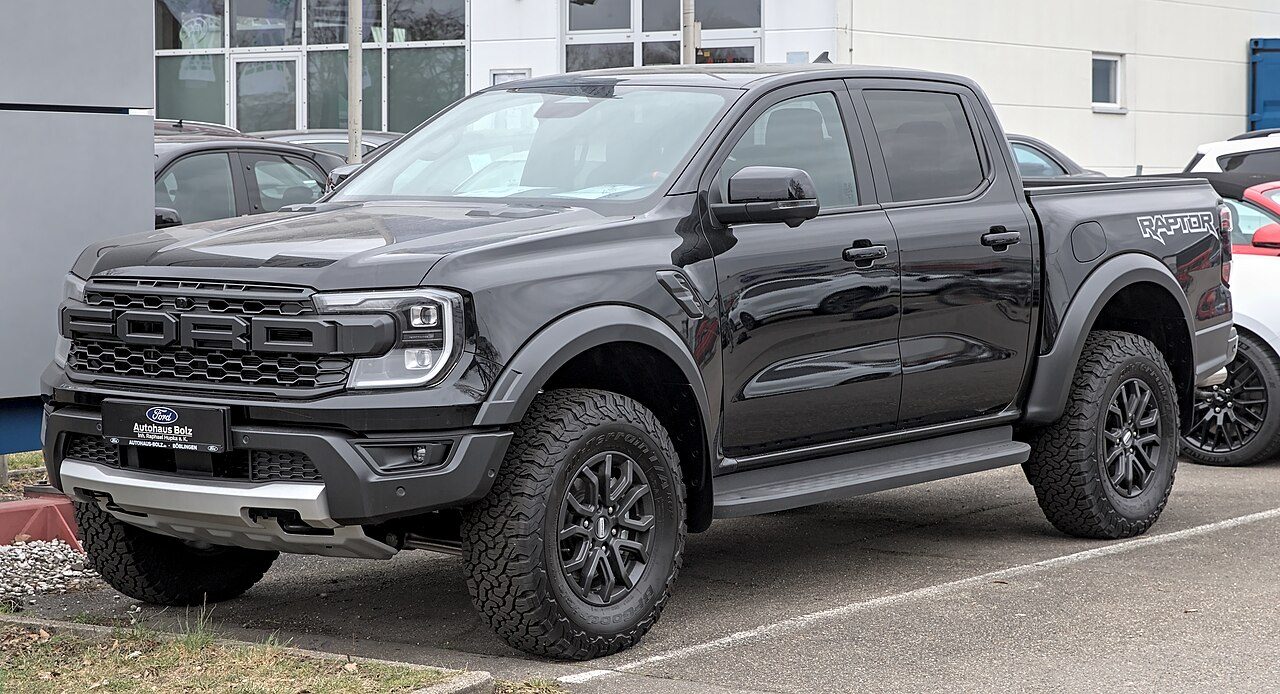
The 2010 Ford Ranger came with 2 engines: 2.3 L 4-cylinder, 4.0 L 6-cylinder. It gets 15 to 24 MPG combined depending on the engine, per the EPA. 6 recall campaigns are on record.
Specs
| Cylinders | 6 |
|---|---|
| Transmission | Automatic · 5 speeds |
| Drivetrain | 4x4 |
| Dimensions (L × W × H) | 5,070 × 1,760 × 1,650 mm (199.6 × 69.3 × 65.0 in) |
| Wheelbase | 2,980 mm (117.3 in) |
| Curb weight | 1,502 kg (3,311 lb) |
| Body style | Small Pickup Trucks 2WD |
Dimensions and weight: median of the 10 versions in Canada's official specifications (NHTSA vPIC). Each version differs slightly.
For sale in United States
Other Ford Ranger for sale in United States
Fuel economy (MPG)
🇺🇸 Local dataBy version
| Engine | Transmission | Drivetrain | City | Highway | Combined |
|---|---|---|---|---|---|
| 2.3 L 4-cylinder | Automatic · 5 speeds | Rear-wheel (RWD) | 19 MPG | 24 MPG | 21 MPG |
| 2.3 L 4-cylinder | Manual · 5 speeds | Rear-wheel (RWD) | 22 MPG | 27 MPG | 24 MPG |
| 4.0 L 6-cylinder | Automatic · 5 speeds | 4x4 | 14 MPG | 18 MPG | 15 MPG |
| 4.0 L 6-cylinder | Automatic · 5 speeds | Rear-wheel (RWD) | 16 MPG | 21 MPG | 18 MPG |
| 4.0 L 6-cylinder | Manual · 5 speeds | 4x4 | 15 MPG | 19 MPG | 17 MPG |
| 4.0 L 6-cylinder | Manual · 5 speeds | Rear-wheel (RWD) | 15 MPG | 21 MPG | 17 MPG |
EPA figures for each version sold in the U.S.
Recalls
It may not apply to vehicles sold in your country. Check with your VIN at the source.
Details
Issue: On certain vehicles, long-term exposure to high absolute humidity and temperature, combined with high temperature cycling, may eventually degrade the propellant contained in the driver-front airbag. This could cause the airbag to deploy with more force than normal. If the airbag inflator ruptures, fragments could be propelled toward vehicle occupants or cause damage to the airbag assembly, preventing its proper function. Safety Risk: If the vehicle is involved in a crash requiring an airbag deployment, the airbag inflator could rupture and create a risk of injury. Corrective Action: Ford will notify owners by mail. The corrective actions for this recall are under development. Note: The Canadian climate results in the propellant degrading slowly. This recall is being conducted as a precaution to address future risk. It is expected that all airbag inflators will be replaced before their function would be affected.
Details
Issue: On certain vehicles, long-term exposure to high absolute humidity and temperature, combined with high temperature cycling, may eventually degrade the propellant contained in the passenger-front airbag. This could cause the airbag to deploy with more force than normal. If the airbag inflator ruptures, fragments could be propelled toward vehicle occupants or cause damage to the airbag assembly, preventing its proper function. Safety Risk: If the vehicle is involved in a crash requiring an airbag deployment, the airbag inflator could rupture and create a risk of injury. Corrective Actions: Owners will be notified by mail and instructed to take their vehicle to a dealer to have the passenger-front airbag inflator replaced. Note: The Canadian climate results in the propellant degrading slowly. This recall is being conducted as a precaution to address future risk. It is expected that all airbag inflators will be replaced before their function would be affected. Additional note: This recall supersedes recalls 2016-347 (Ford Safety Improvement Program 16S26), 2017-024 (Ford Recall 17S01) and 2018-035 (Ford Recall 18S01). Vehicles repaired under the previous recalls do not require repair under this recall.
Details
Ford Canada is conducting a voluntary Safety Improvement Program involving passenger airbag inflators in certain vehicles that were originally sold or ever registered in certain high humidity areas of the United States equipped with Takata airbags. Ford will replace the driver or passenger inflator on affected vehicles, depending on the vehicle involved. Owners who believe their vehicles may have been originally purchased or registered in the states of New Jersey, Delaware, District of Columbia, Maryland, Pennsylvania, Ohio, Indiana, Illinois, Virginia, West Virginia, Kentucky, Missouri, Nebraska, Kansas, Oklahoma, Arkansas, Tennessee, North Carolina, Nevada, Arizona, New Mexico, California, Texas, Louisiana, Mississippi, Alabama, Georgia, South Carolina, Florida, Hawaii, Puerto Rico or the U.S. Virgin Islands should contact a Ford dealer. This action is not being conducted under the requirements of the Motor Vehicle Safety Act. Note: This Safety Improvement Program is superseded by recall 2019005 (Ford Recall 19S01). Please see <a href="http://wwwapps.tc.gc.ca/Saf-Sec-Sur/7/VRDB-BDRV/search-recherche/detail.aspx?lang=eng&&rn=2019005">recall 2019005</a> for more information.
Details
On certain 2011 Ranger vehicles, the multi-function switch, installed during vehicle assembly, could malfunction and fail. Additionally, other vehicle models may have received the affected switch as a replacement part during service, and are therefore also involved in this campaign. Failure of the multi-function switch could result in a loss of turn signal, tail lamp, hazard warning signal flasher and/or stop lamp function. Failure of these lighting components to illuminate may result in the following road users being unaware of the driver's intentions, as well as reducing vehicle conspicuity during hours of darkness, which could increase the risk of a crash causing property damage and/or personal injury. Correction: Dealers will inspect and, if necessary, replace the multi-function switch.
Details
On certain vehicles equipped with a 2.3L engine, the fuel line in the area of the throttle body shield may not have the protective convolute properly installed. If the protective convolute on the fuel line is not assembled in the proper position, the fuel line may contact the edge of the shield. Over time this contact may chafe the fuel line, resulting in a fuel leak. Fuel leakage, in the presence of an ignition source, could result in a fire causing property damage and/or personal injury. Correction: Dealers will trim the throttle body shield, inspect the fuel line for damage, and replace the line if necessary.
Details
On certain vehicles, the right rear parking brake cable may disconnect from the parking brake actuating lever when the parking brake pedal is released and the parking brake shoes are frozen to the drum. The cable may lift off the lever as it moves when the parking brake is released, if the brakes are sufficiently frozen so that the lever does not move. Should the right rear parking brake cable becomes disconnected, the parking brake pedal will exhibit extended travel and may not be able to fully apply the parking brake in subsequent use. If the vehicle is equipped with a manual transmission, and is parked in neutral without a fully applied parking brake, the vehicle may move unintentionally and cause property damage or personal injury to bystanders. Correction: Dealers will install a revised right side actuator with the lever pivot located at the top of the actuator.
Translated automatically from the RDW's Dutch text. The original is at the source.
It may not apply to vehicles sold in your country. Check with your VIN at the source.
Consequence · Remedy
The inflator module for the driver and passenger airbags may build up excessive pressure. If the airbag is activated, the internal pressure may cause the inflator module to rupture. This can result in metal fragments becoming dislodged and being ejected. Dislodged metal fragments can seriously injure or kill passengers.
The vehicle owner is requested to make an appointment with a Ford authorized repairer or Ford authorized manufacturer. They will replace the airbag inflator.
On the road
Cars of this model first registered in 2010, from official registers. Each figure belongs to its country.
2010 vs. other Ranger years
🇺🇸 Local dataOwner complaints and recall campaigns on record at NHTSA for each model year. Fewer complaints can also mean fewer cars sold or a newer car.
Questions
- What engine does the 2010 Ford Ranger have?
- The 2010 Ford Ranger came with 2 engines: 2.3 L 4-cylinder, 4.0 L 6-cylinder.
- What is the fuel economy of the 2010 Ford Ranger?
- It gets 15 to 24 MPG combined depending on the engine, per the EPA.
- Does the 2010 Ford Ranger have recalls?
- 6 recall campaigns are on record. The latest concerns Airbag (2021-01-27).
Other years
Other models by Ford
Do you own a 2010 Ranger?
Post it for free and reach buyers who are already looking at this exact car.
- Free, with no commission
- About three minutes
- Your listing shows up on this page