
Ford Ranger 2010
El 2010 Ford Ranger vino con 2 motores: 2.3 L 4-cilindro, 4.0 L 6-cilindro. Obtiene 6.4 a 10.2 km/l combinado dependiendo del motor, según la EPA. 6 campañas de retiro están registradas.
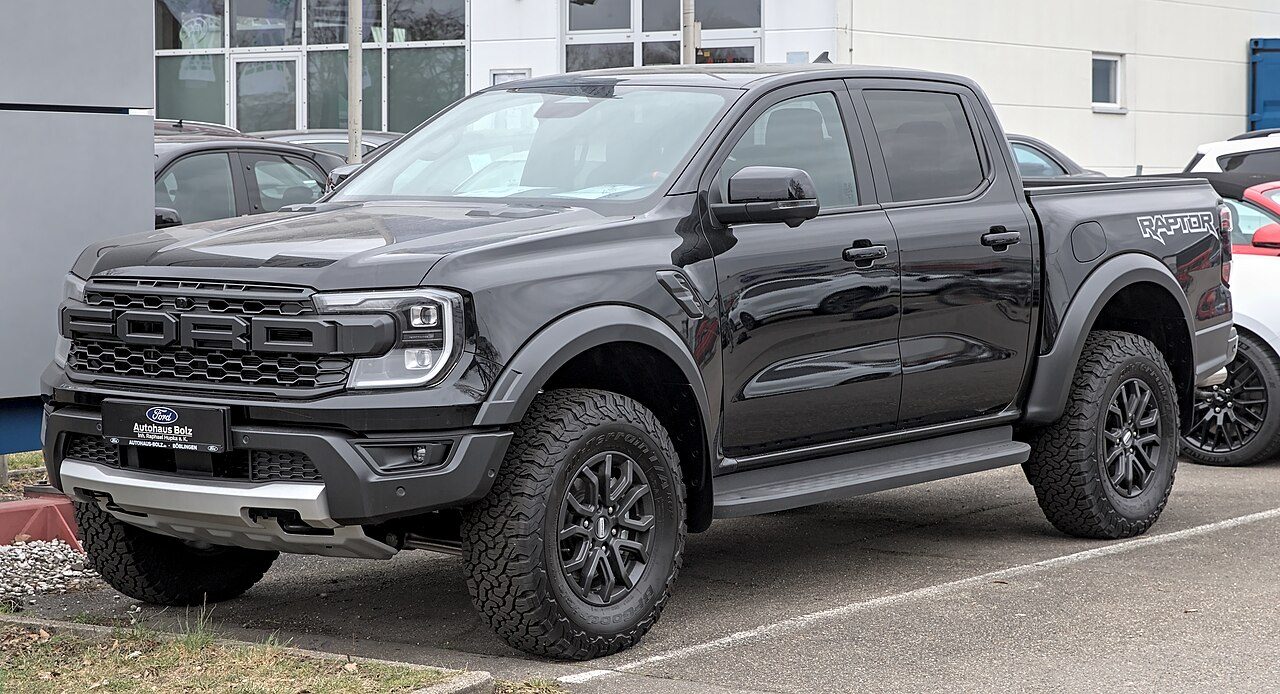
Especificaciones
| Cilindros | 6 |
|---|---|
| Transmisión | Automática · 5 velocidades |
| Tracción | 4x4 |
| Dimensiones (L × A × H) | 5,070 × 1,760 × 1,650 mm (199.6 × 69.3 × 65.0 in) |
| Distancia entre ejes | 2,980 mm (117.3 in) |
| Peso en vacío | 1,502 kg (3,311 lb) |
| Estilo de carrocería | Camionetas pequeñas 2WD |
Dimensiones y peso: mediana de las 10 versiones en las especificaciones oficiales de Canadá (NHTSA vPIC). Cada versión difiere ligeramente.
A la venta en Estados Unidos
Otros Ford Ranger en venta en Estados Unidos
Economía de combustible (MPG)
🇺🇸 Dato localPor versión
| Motor | Transmisión | Tracción | Ciudad | Autopista | Mixto |
|---|---|---|---|---|---|
| 2.3 L 4-cilindro | Automática · 5 velocidades | Tracción trasera (RWD) | 8.1 km/l (19 MPG) | 10.2 km/l (24 MPG) | 8.9 km/l (21 MPG) |
| 2.3 L 4-cilindro | Manual · 5 velocidades | Tracción trasera (RWD) | 9.3 km/l (22 MPG) | 11.5 km/l (27 MPG) | 10.2 km/l (24 MPG) |
| 4.0 L 6-cilindro | Automática · 5 velocidades | 4x4 | 6.0 km/l (14 MPG) | 7.6 km/l (18 MPG) | 6.4 km/l (15 MPG) |
| 4.0 L 6-cilindro | Automática · 5 velocidades | Tracción trasera (RWD) | 6.8 km/l (16 MPG) | 8.9 km/l (21 MPG) | 7.6 km/l (18 MPG) |
| 4.0 L 6-cilindro | Manual · 5 velocidades | 4x4 | 6.4 km/l (15 MPG) | 8.1 km/l (19 MPG) | 7.2 km/l (17 MPG) |
| 4.0 L 6-cilindro | Manual · 5 velocidades | Tracción trasera (RWD) | 6.4 km/l (15 MPG) | 8.9 km/l (21 MPG) | 7.2 km/l (17 MPG) |
Cifras de la EPA para cada versión vendida en EE. UU.
Llamados a revisión
Traducción automática del texto oficial. El original está en la fuente.
Puede no aplicar a los vehículos vendidos en tu país. Verifica con tu VIN en la fuente.
Detalles
Issue: On certain vehicles, long-term exposure to high absolute humidity and temperature, combined with high temperature cycling, may eventually degrade the propellant contained in the driver-front airbag. This could cause the airbag to deploy with more force than normal. If the airbag inflator ruptures, fragments could be propelled toward vehicle occupants or cause damage to the airbag assembly, preventing its proper function. Safety Risk: If the vehicle is involved in a crash requiring an airbag deployment, the airbag inflator could rupture and create a risk of injury. Corrective Action: Ford will notify owners by mail. The corrective actions for this recall are under development. Note: The Canadian climate results in the propellant degrading slowly. This recall is being conducted as a precaution to address future risk. It is expected that all airbag inflators will be replaced before their function would be affected.
Detalles
Issue: On certain vehicles, long-term exposure to high absolute humidity and temperature, combined with high temperature cycling, may eventually degrade the propellant contained in the passenger-front airbag. This could cause the airbag to deploy with more force than normal. If the airbag inflator ruptures, fragments could be propelled toward vehicle occupants or cause damage to the airbag assembly, preventing its proper function. Safety Risk: If the vehicle is involved in a crash requiring an airbag deployment, the airbag inflator could rupture and create a risk of injury. Corrective Actions: Owners will be notified by mail and instructed to take their vehicle to a dealer to have the passenger-front airbag inflator replaced. Note: The Canadian climate results in the propellant degrading slowly. This recall is being conducted as a precaution to address future risk. It is expected that all airbag inflators will be replaced before their function would be affected. Additional note: This recall supersedes recalls 2016-347 (Ford Safety Improvement Program 16S26), 2017-024 (Ford Recall 17S01) and 2018-035 (Ford Recall 18S01). Vehicles repaired under the previous recalls do not require repair under this recall.
Detalles
Ford Canada is conducting a voluntary Safety Improvement Program involving passenger airbag inflators in certain vehicles that were originally sold or ever registered in certain high humidity areas of the United States equipped with Takata airbags. Ford will replace the driver or passenger inflator on affected vehicles, depending on the vehicle involved. Owners who believe their vehicles may have been originally purchased or registered in the states of New Jersey, Delaware, District of Columbia, Maryland, Pennsylvania, Ohio, Indiana, Illinois, Virginia, West Virginia, Kentucky, Missouri, Nebraska, Kansas, Oklahoma, Arkansas, Tennessee, North Carolina, Nevada, Arizona, New Mexico, California, Texas, Louisiana, Mississippi, Alabama, Georgia, South Carolina, Florida, Hawaii, Puerto Rico or the U.S. Virgin Islands should contact a Ford dealer. This action is not being conducted under the requirements of the Motor Vehicle Safety Act. Note: This Safety Improvement Program is superseded by recall 2019005 (Ford Recall 19S01). Please see <a href="http://wwwapps.tc.gc.ca/Saf-Sec-Sur/7/VRDB-BDRV/search-recherche/detail.aspx?lang=eng&&rn=2019005">recall 2019005</a> for more information.
Detalles
On certain 2011 Ranger vehicles, the multi-function switch, installed during vehicle assembly, could malfunction and fail. Additionally, other vehicle models may have received the affected switch as a replacement part during service, and are therefore also involved in this campaign. Failure of the multi-function switch could result in a loss of turn signal, tail lamp, hazard warning signal flasher and/or stop lamp function. Failure of these lighting components to illuminate may result in the following road users being unaware of the driver's intentions, as well as reducing vehicle conspicuity during hours of darkness, which could increase the risk of a crash causing property damage and/or personal injury. Correction: Dealers will inspect and, if necessary, replace the multi-function switch.
Detalles
On certain vehicles equipped with a 2.3L engine, the fuel line in the area of the throttle body shield may not have the protective convolute properly installed. If the protective convolute on the fuel line is not assembled in the proper position, the fuel line may contact the edge of the shield. Over time this contact may chafe the fuel line, resulting in a fuel leak. Fuel leakage, in the presence of an ignition source, could result in a fire causing property damage and/or personal injury. Correction: Dealers will trim the throttle body shield, inspect the fuel line for damage, and replace the line if necessary.
Detalles
On certain vehicles, the right rear parking brake cable may disconnect from the parking brake actuating lever when the parking brake pedal is released and the parking brake shoes are frozen to the drum. The cable may lift off the lever as it moves when the parking brake is released, if the brakes are sufficiently frozen so that the lever does not move. Should the right rear parking brake cable becomes disconnected, the parking brake pedal will exhibit extended travel and may not be able to fully apply the parking brake in subsequent use. If the vehicle is equipped with a manual transmission, and is parked in neutral without a fully applied parking brake, the vehicle may move unintentionally and cause property damage or personal injury to bystanders. Correction: Dealers will install a revised right side actuator with the lever pivot located at the top of the actuator.
Traducción automática del texto oficial. El original está en la fuente.
Puede no aplicar a los vehículos vendidos en tu país. Verifica con tu VIN en la fuente.
Consecuencia · Remedio
El módulo de inflador de los airbags del conductor y del pasajero puede acumular presión excesiva. Si se activa el airbag, la presión interna puede causar que el módulo de inflador se rompa. Esto puede resultar en fragmentos metálicos que se desplacen y se expulsen. Los fragmentos metálicos desplazados pueden lesionar gravemente o matar a los pasajeros.
Se solicita al propietario del vehículo que haga una cita con un reparador autorizado de Ford o un fabricante autorizado de Ford. Reemplazarán el inflador del airbag.
En la carretera
Autos de este modelo registrados por primera vez en 2010, de registros oficiales. Cada cifra pertenece a su país.
2010 vs. otros años de Ranger
🇺🇸 Dato localQuejas de propietarios y campañas de recall registradas en NHTSA para cada año modelo. Menos quejas también puede significar menos autos vendidos o un auto más nuevo.
Preguntas
- ¿Qué motor tiene el 2010 Ford Ranger?
- El 2010 Ford Ranger vino con 2 motores: 2.3 L 4-cilindro, 4.0 L 6-cilindro.
- ¿Cuál es la economía de combustible del 2010 Ford Ranger?
- Obtiene 6.4 a 10.2 km/l combinado dependiendo del motor, según la EPA.
- ¿Tiene el 2010 Ford Ranger campañas de retiro?
- 6 campañas de retiro están registradas. La más reciente concierne a Airbag (2021-01-27).
Otros años
Otros modelos de Ford
¿Posees un 2010 Ranger?
Publícalo gratis y llega a compradores que ya están buscando este auto en particular.
- Gratis, sin comisión
- Aproximadamente tres minutos
- Tu anuncio aparece en esta página