- Inicio
- Mercedes-Benz
- E-Class
- 2017

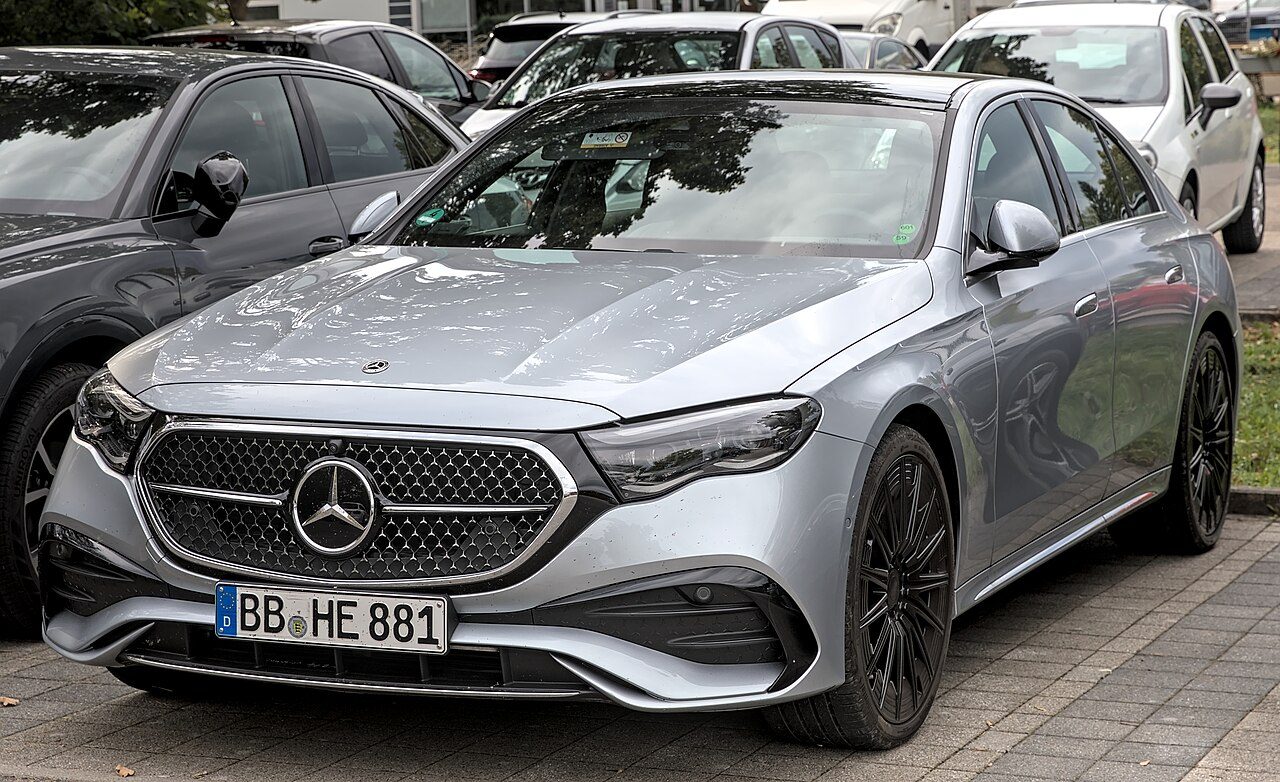
Mercedes-Benz E-Class 2017
El 2017 Mercedes-Benz E-Class tiene un motor de 1.9 L con 192 hp. NHTSA NCAP le da 5 de 5 estrellas. 20 campañas de retiro y 167 quejas de propietarios están registradas.
Especificaciones
| Tracción | Tracción trasera (RWD) |
|---|---|
| Dimensiones (L × A × H) | 5,063 × 1,860 × 1,494 mm (199.3 × 73.2 × 58.8 in) |
| Asientos | 5 |
A la venta en Estados Unidos
Seguridad
Resultados de pruebas de choque por mercado. Pueden variar según versión y equipamiento.
Llamados a revisión
Traducción automática del texto oficial. El original está en la fuente.
Puede no aplicar a los vehículos vendidos en tu país. Verifica con tu VIN en la fuente.
Detalles
Issue: On certain vehicles, an incorrect passenger-front airbag may have been installed during a previous repair. As a result, the airbag may not inflate properly in a crash. Safety Risk: An airbag that does not inflate properly can increase the risk of injury in a crash. Corrective Action: Mercedes-Benz will notify owners by mail and instruct you to bring your vehicle to a dealer to replace the passenger-front airbag.
Detalles
Issue: On certain vehicles, the trunk spoiler might not be properly attached. At higher speeds, this could cause the spoiler to detach from the vehicle. Safety Risk: A spoiler that detaches from the vehicle could create a hazard for other drivers and nearby people. Corrective Actions: Mercedes-Benz will notify owners by mail and instruct them to take their vehicle to a dealer to inspect the trunk spoiler and ensure it is properly attached.
Detalles
Issue: On certain coupe and cabriolet models, the front seatbacks may not fully lock on the right side. In a crash, a seatback that is not properly locked could allow unsecured objects from the rear seats to move forward. Safety Risk: A seatback that is not properly locked could increase the risk of injury in a crash. Corrective Actions: The company will notify owners by mail. Owners will be instructed to take their vehicle to a dealer to inspect front seatbacks and replace them as necessary. Note: This is an expansion of Recall 2018-161.
Detalles
On certain vehicles, long-term exposure to high absolute humidity and temperature, combined with high temperature cycling, could eventually degrade the propellant contained in the passenger frontal airbag. This could cause the airbag to deploy with more force than normal. As a result, if the vehicle were involved in a collision that warrants airbag deployment, fragments could be propelled toward vehicle occupants, and the airbag assembly could be damaged, preventing proper function. These issues could increase the risk of injury. Correction: Dealers will replace the passenger frontal airbag module. Note: Canadian climate results in the propellant degrading slowly. The recall is being conducted as a precaution to address future risk, and is expected to replace airbag inflators before their function would be affected.
Detalles
On certain vehicles originally sold or currently registered in areas of heavy road salt usage during winter months (Quebec, New Brunswick, Nova Scotia, Prince Edward Island, and Newfoundland & Labrador), the bolts that attach the electric power steering assist motor to the steering gear housing may corrode and break. This could cause a loss of power steering assist. The resulting increase in steering effort could create the risk of a crash causing injury and/or damage to property. Correction: Dealers will replace the mounting bolts and apply a corrosion protection coating to the gear housing and bolts. If the bolts bolt cannot be removed, a replacement steering gear will be installed.
Detalles
Certain vehicles may have been built with an incorrectly limited passenger seat adjustment range. This could allow the seat to be positioned too far forward, potentially increasing the risk of injury to the seat occupant in the event of a crash. Correction: Dealers will inspect the adjustment range of the passenger seat and install the mechanical adjustment range limiter or update the seat control unit software.
Detalles
Certain vehicles may not comply with the requirements of Canada Motor Vehicle Safety Standard (CMVSS) 108 - Lighting System and Retroreflective Devices. Vehicles may have been assembled with headlamps that allow for horizontal adjustment, which is contrary to the requirements of the standard. This could reduce vehicle visibility, or could adversely affect the vision of oncoming drivers during low-light and night-time conditions, which could increase the risk of a crash causing injury and/or damage to property. Correction: Dealers will install sealing caps on the headlamps to seal the adjustment screws.
Detalles
On certain vehicles, the seatbacks of the front seats may not fully lock on the right-hand side of the respective seat. If the seatback is improperly locked, in the event of a crash, unsecured objects in the rear seats might not be held back and the risk of injury to the front occupants would be increased. Correction: Dealers will inspect the locking of the front seatbacks, and replace the seatbacks as necessary. Note: This recall is superseded by recall 2019091. Please see <a href="http://wwwapps.tc.gc.ca/Saf-Sec-Sur/7/VRDB-BDRV/search-recherche/detail.aspx?lang=eng&&rn=2019091">recall 2019091</a> for more information.
Detalles
Certain vehicles may not comply with the requirements of Canada Motor Vehicle Safety Standard (CMVSS) 108 - Lighting System and Retroreflective Devices. The LED headlamps might not have been adjusted to proper specification during manufacturing, and may deviate from the tolerance range prescribed by the standard. This could result in reduced low beam range, which could increase the risk of a crash causing injury and/or damage to property. Correction: Dealers will check the setting of the headlamps and correct them as necessary.
Detalles
On certain vehicles, electrostatic discharge, when combined with a broken clock spring and insufficient grounding of the steering components, could lead to an inadvertent deployment of the driver's frontal airbag. Unintended airbag deployment, in a non-warranted (non-impact) situation, could startle the driver, which could result in a crash causing injury and/or property damage. In some instances, inadvertent deployment could cause minor injuries to vehicle occupants. Correction: Dealers will add sufficient grounding to the steering components. Note: A broken clock spring would result in a driver airbag warning message appearing in the instrument cluster, as well as a red airbag warning lamp illuminating.
Detalles
Certain vehicles may have been equipped with airbag igniters that do not meet specifications. This could cause the affected airbags to fail to deploy properly in the event of a crash (where deployment is warranted), which could increase the risk of injury to vehicle occupants. Correction: Correction: Dealers will replace the affected passenger frontal airbag, knee airbag or window airbag.
Detalles
On certain vehicles, the electric power steering connector may not be properly sealed against water entry. This could allow moisture to enter the power steering control unit which could interrupt the signal and cause the electric steering assist to deactivate. A loss of power steering assist could unexpectedly increase steering effort which would increase the risk of a crash causing injury and/or damage to property. Correction dealers will replace the connector and, if necessary, replace the steering rack.
Detalles
Certain vehicles may not comply with Canada Motor Vehicle Safety Standard (CMVSS 101) – Location and Identification of Controls and Displays. These vehicles may have an incorrect software version for the widescreen instrument cluster. This could result in the cluster not displaying any content upon vehicle start or a display reset may occur while driving, contrary to the requirements of the standard. Correction: Dealers will update the instrument cluster software.
Detalles
Certain vehicles may fail to comply with the requirements of Canada Motor Vehicle Safety Standard (CMVSS) 208 - Occupant Protection in Frontal Impacts. Certain airbag control units may have been programmed incorrectly. In the event of a low speed crash warranting first stage deployment of the driver's or passenger's frontal airbags, the airbag may incorrectly deploy the second (higher impact) stage. If a front seat occupant was unbelted and out of position, the risk of injury to that occupant could be increased. Correction: Dealers will update the airbag control unit.
Detalles
Certain vehicles may have been equipped with driver and passenger pelvis airbags and/or a passenger frontal airbag that does not meet specifications. This could cause affected airbags to fail to deploy properly in the event of a crash warrants airbag deployment, which could increase the risk of injury to the occupants. Correction: Dealers will replace affected airbag modules.
Detalles
On certain vehicles, the starting current limiter could be overloaded under certain conditions. In the event the starter is blocked, a very high electric current could flow through the starting current limiter during repeated engine starting attempts. The high electric draw could cause the starting current limiter to overheat causing the surrounding components to melt which would increase the risk of fire causing injury and/or damage to property. Correction : Dealers will install an additional fuse in the electrical line to the starter.
Detalles
On certain vehicles, the column-mounted shift lever module could become inoperative due to internal circuit board damage. If this occurs while the vehicle is stationary, the vehicle might not be able to move forward or backward as selected by the driver with the shift lever. This could increase the risk of a crash causing injury and/or damage to property. Correction: Dealers will replace the steering column module.
Detalles
On certain vehicles, the front passenger seat occupancy detection control unit might be incorrectly installed. This could result in a kinked pressure hose when the seat is moved towards the rearmost and lowest position, which could lead to the misclassification of a seat occupant. The occupant could be incorrectly reclassified as a child seat, and in the event of a crash warranting airbag deployment, could increase the risk of injury to the front passenger seat occupant. Correction: Dealers will check the routing of the pressure hose of the seat occupancy detection control unit and replace the pressure hose and seat occupancy detection mat if necessary.
Detalles
Certain vehicles may have been equipped with an underbody panel which might not provide sufficient clearance to the left catalyst. As a result, heat from the catalyst could melt and potentially ignite the plastic underbody panel, resulting in a fire causing injury and/or damage to property. Correction: Dealers will inspect, and if necessary, replace the underbody paneling.
Detalles
On certain vehicles, the rear seat bench seat frame could damage the wiring harness to the fuel system control unit. If the wiring harness were to become damaged, the fuel pump, the fuel tank pressure sensor and/or the fuel gauge could fail, depending on the affected wire. Should the fuel pump fail, the fuel supply to the engine would stop, causing the vehicle to stall without warning, increasing the risk of a crash causing injury and/or damage to property. Correction: Dealers will modify the routing of the wiring harness, and repair it if necessary.
Problemas comunes
167 reportes🇺🇸 Dato localReportado por dueños a la fuente de abajo. No es un veredicto sobre este auto: es lo que la gente escribió.
Los informes de los propietarios se traducen automáticamente del inglés. El original está en NHTSA bajo cada número de informe.
El Retiro de la Limitador de Corriente de Arranque (Campaña NHTSA 16V831000 / 17V114000): Si tu E-Class no arrancaba o tenía dificultades para girar inicialmente, un limitador de corriente de arranque defectuoso puede sobrecalentar severamente las líneas eléctricas hacia el motor de arranque, causando que los componen…
Mi vehículo tiene alrededor de 68k millas, mientras conducía por la autopista de repente el motor del auto comenzó a temblar y se encendió la luz de revisión del motor en el tablero. Este temblor del motor se detendría cuando el vehículo se conducía a alta velocidad. Al regresar a casa revisé los códigos DTC y tenía c…
El vidrio del techo solar se hizo añicos y el agua entró al auto.
Hay un retiro para mi modelo 2017 Mercedes E300 4matic por el módulo de cambio de la columna de dirección, pero me están diciendo que mi VIN específico no fue incluido, pero está teniendo exactamente los mismos problemas que el retiro, mientras conducía la palanca de cambio no puede salir de 'drive' para ir a 'reverse…
Código P052E después de cambiar el aceite. Parece que esto sucede a menudo según mis foros.
Mi coche no acelera cuando cambio a marcha adelante o reversa. Dice "reversa no posible - se requiere servicio". De la nada. Hay un recall conocido en estos modelos de coche, pero Mercedes Benz dice que es específico para el VIN y el mío no está cubierto a pesar de que estoy experimentando el mismo problema exacto. Fe…
Estoy teniendo problemas con mi módulo de control que no avanza o retrocede a veces y hubo un recall en los modelos de este vehículo por esa razón exacta ID de NHTSA: 17V078000 Emitido: 2 de febrero del 17. El concesionario me dice que no está abierto. Tengo miedo por mi seguridad cuando mi coche no cambia a la marcha…
Soy propietario de un Mercedes Benz E-Class 2017. Estoy empezando a oler gasolina en la cabina y también fuera de mi vehículo. Intenté ingresar mi número de VIN para ver si había recalls. Hay algo listado por el olor a gasolina. ¿Puede alguien ayudarme con este asunto?
El contacto posee un Mercedes-Benz E400 Coupe 2017. El contacto declaró que el recubrimiento de metal plateado en la palanca de liberación del asiento estaba áspero y con bordes afilados en ambos lados del conductor y del pasajero del vehículo de dos puertas. El hijo del contacto había agarrado la palanca de liberació…
El contacto posee un Mercedes-Benz E300 2017. El contacto declaró que mientras conducía a una velocidad no divulgada, el vehículo no aceleró como era de esperar al presionar el pedal del acelerador. Apareció el mensaje "Reversa no posible - se requiere servicio". El contacto se detuvo al lado de la carretera y apagó e…
El contacto posee un Mercedes-Benz E300 2017. El contacto declaró que mientras conducía a varias velocidades, el vehículo perdía intermitentemente la funcionalidad de la dirección asistida. El contacto declaró que la falla ocurría cada vez más al girar. El vehículo fue llevado a varios mecánicos independientes y al co…
El contacto posee un Mercedes-Benz E300 2017. El contacto declaró que mientras conducía a una velocidad no divulgada, había un fuerte olor a gasolina entrando al vehículo a través de los ventiladores, y el olor estaba en el interior y exterior del vehículo. No se iluminaron luces de advertencia. El vehículo fue llevad…
2017 vs. otros años de E-Class
🇺🇸 Dato localQuejas de propietarios y campañas de recall registradas en NHTSA para cada año modelo. Menos quejas también puede significar menos autos vendidos o un auto más nuevo.
Preguntas
- ¿Qué motor tiene el 2017 Mercedes-Benz E-Class?
- El 2017 Mercedes-Benz E-Class tiene un motor de 1.9 L con 192 hp.
- ¿Es seguro el 2017 Mercedes-Benz E-Class?
- NHTSA NCAP le da 5 de 5 estrellas.
- ¿Tiene el 2017 Mercedes-Benz E-Class campañas de retiro?
- 20 campañas de retiro están registradas. La más reciente concierne a Airbag (2021-08-16).
- ¿Cuáles son los problemas comunes del 2017 Mercedes-Benz E-Class?
- 167 propietarios han presentado quejas, la mayoría sobre motor.
Otros años
Otros modelos de Mercedes-Benz
¿Posees un 2017 E-Class?
Publícalo gratis y llega a compradores que ya están buscando este auto en particular.
- Gratis, sin comisión
- Aproximadamente tres minutos
- Tu anuncio aparece en esta página