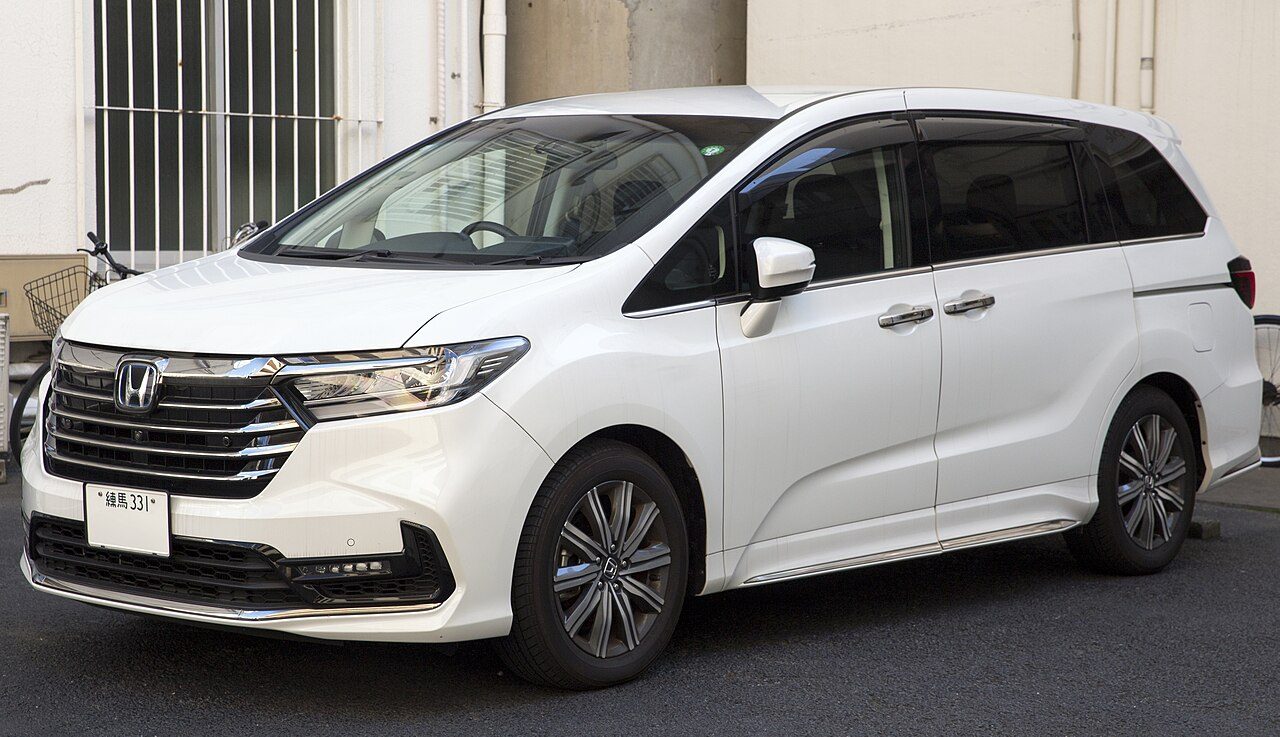
Honda Odyssey 2003
El 2003 Honda Odyssey tiene un motor de 3.5 L. Obtiene 8.1 km/l combinado (6.8 ciudad, 9.8 autopista), según la EPA. 15 campañas de retiro y 940 quejas de propietarios están registradas.
Especificaciones
| Cilindros | 6 |
|---|---|
| Transmisión | Automática · 5 velocidades |
| Tracción | Delantera (FWD) |
| Dimensiones (L × A × H) | 5,110 × 1,920 × 1,755 mm (201.2 × 75.6 × 69.1 in) |
| Distancia entre ejes | 3,000 mm (118.1 in) |
| Peso en vacío | 1,968 kg (4,339 lb) |
| Estilo de carrocería | Minivan - 2WD |
Dimensiones y peso: mediana de las 2 versiones en las especificaciones oficiales de Canadá (NHTSA vPIC). Cada versión difiere ligeramente.
A la venta en Estados Unidos
Seguridad
Resultados de pruebas de choque por mercado. Pueden variar según versión y equipamiento.
Economía de combustible (MPG)
🇺🇸 Dato localLlamados a revisión
Traducción automática del texto oficial. El original está en la fuente.
Consecuencia · Remedio
Una explosión del inflador puede resultar en fragmentos de metal afilados golpeando al conductor u otros ocupantes, resultando en lesiones graves o muerte.
Honda notificará a los propietarios, y los concesionarios reemplazarán el inflador de la bolsa de aire frontal del conductor, sin costo alguno. El retiro comenzó el 12 de agosto de 2019. Los propietarios pueden contactar al servicio al cliente de Honda al 1-888-234-2138. Los números de Honda para este retiro son Q5A y Y58.
Consecuencia · Remedio
Una explosión del inflador puede resultar en fragmentos de metal afilados golpeando al conductor u otros ocupantes, resultando en lesiones graves o muerte.
Honda notificará a los propietarios, y los concesionarios reemplazarán el inflador del airbag frontal del pasajero, sin costo alguno. El retiro comenzó el 12 de agosto de 2019. Los propietarios pueden contactar el servicio al cliente de Honda al 1-888-234-2138. Los números de Honda para este retiro son E5D y X5C.
Consecuencia · Remedio
Una explosión de un inflador dentro del módulo del airbag frontal del conductor puede resultar en fragmentos de metal afilados golpeando al conductor, al pasajero del asiento delantero u otros ocupantes, resultando en lesiones graves o muerte.
Honda notificará a los propietarios, y los concesionarios reemplazarán el inflador del airbag del conductor con un inflador alternativo, sin cargo. El recall comenzó el 10 de abril de 2019. Los propietarios de Honda pueden contactar al servicio al cliente al 1-888-234-2138. El número de Honda para este recall es O41. Los propietarios de Acura pueden contactar al servicio al cliente al 1-888-234-2138. El número de Acura para este recall es U40.
Consecuencia · Remedio
Un airbag instalado incorrectamente puede desplegarse de manera inapropiada en caso de un choque, aumentando el riesgo de lesión.
Honda notificará a los propietarios, y los concesionarios inspeccionarán y, si es necesario, reemplazarán el ensamblaje del módulo del airbag frontal del pasajero, sin cargo. El retiro comenzó el 22 de junio de 2018. Los propietarios pueden contactar al servicio al cliente de Honda al 1-888-234-2138. Los números de Honda para este retiro son K1P y M1O.
Consecuencia · Remedio
Un ruptura del inflador puede resultar en fragmentos de metal que impacten a los ocupantes del vehículo, resultando en lesiones graves o muerte.
Honda notificará a los propietarios, y los concesionarios reemplazarán el inflador del airbag frontal del pasajero, sin costo alguno. El retiro comenzó el 27 de junio de 2016. Los propietarios pueden contactar el servicio al cliente de Honda al 1-888-234-2138. Los números de Honda para este retiro son KA0, KA1, KA2 y KA3.
Consecuencia · Remedio
Los airbags que no cumplen con los requisitos de seguridad aumentan el riesgo de lesiones a ocupantes en caso de un choque.
Honda notificará a los propietarios, los concesionarios reemplazarán el módulo del airbag frontal del pasajero, sin costo alguno. El retiro comenzó el 27 de octubre de 2015. Los propietarios pueden comunicarse con el servicio al cliente de Honda al 1-888-234-2138. El número de Honda para este retiro es JU0.
Consecuencia · Remedio
En caso de un accidente que requiera el despliegue del airbag frontal del pasajero, el inflador podría romperse con fragmentos metálicos que impacten al ocupante del asiento del pasajero u otros ocupantes, posiblemente causando lesiones graves o la muerte.
Honda notificará a los propietarios, y los concesionarios reemplazarán el inflador del airbag del pasajero, sin costo alguno. El retiro comenzó el 1 de julio de 2015. Los propietarios pueden contactar el servicio al cliente de Honda al 1-888-234-2138. Los números de Honda para este retiro son JU4, JU5, JU6 y JU7. Nota: Los vehículos que ya han recibido un inflador de airbag del pasajero como parte de la solución de retiro de una campaña anterior, como 14V353 o 14V700 (números de retiro de Honda S95, JH6, JH7, JH8, JH9, JJ0, JJ1, JJ2, JJ6, JM5 y JM6) no están incluidos en este retiro. Sin embargo, este retiro anula 13V132 y 14V349. Nota: El 18 de diciembre de 2015, Honda informó a la NHTSA de una expansión de este retiro para incluir ciertos vehículos Honda CR-V del año modelo 2004, además de vehículos CR-V del año modelo 2003 adicionales.
Consecuencia · Remedio
En caso de un accidente que requiera el despliegue del airbag frontal del conductor, el inflador podría romperse con fragmentos metálicos que impacten al conductor u otros ocupantes, resultando en lesiones graves o la muerte.
Honda notificará a los propietarios, y los concesionarios reemplazarán el inflador de la bolsa de aire frontal del conductor, sin costo alguno. El retiro comenzó el 1 de julio de 2015. Los propietarios pueden contactar al servicio al cliente de Honda al 1-888-234-2138. Los propietarios pueden contactar al servicio al cliente de Acura al 1-800-382-2238, seleccionando la opción 4. Nota: Los vehículos que hayan tenido su bolsa de aire frontal del conductor reemplazada previamente como parte de un remedio de retiro antes del 12 de septiembre de 2014 deben reemplazar su bolsa de aire bajo este retiro también. Los vehículos que, a partir del 12 de septiembre de 2014, recibieron un remedio por un retiro previo de inflador de bolsa de aire frontal del conductor ya recibieron un inflador de un diseño diferente, y por lo tanto no están incluidos en este retiro y no requieren servicio adicional. Nota: Este retiro reemplaza completamente los retiros 08V-593, 09V-259, 10V-041, 11V-260, 14V-351 y 15V-153. Los números de Honda para este retiro son JQ9, JR0, JR1, JR2, JR3, JR4, JR5, JR6, JR7 y JR8.
Consecuencia · Remedio
El despliegue involuntario de los airbags puede aumentar el riesgo de lesiones y la posibilidad de un choque vehicular.
Los concesionarios de Honda reemplazarán la unidad de control electrónico del sistema de sujeción suplementaria (SRS ECU). El retiro comenzó el 22 de febrero de 2016. Los propietarios pueden contactar al servicio al cliente de Honda al 1-800-999-1009. El número de Honda para este retiro es JN6 (Odyssey) y JN7 (MDX). Nota: Este retiro sustituye al retiro 13V-412. Los vehículos que tenían un filtro de ruido instalado como solución para esa campaña deben reemplazar el SRS ECU bajo esta campaña.
Consecuencia · Remedio
En caso de un accidente que requiera el despliegue del airbag frontal del pasajero, el inflador podría romperse con fragmentos metálicos que impacten a los ocupantes del vehículo, lo que podría resultar en lesiones graves o la muerte.
Honda notificará a los propietarios, y los concesionarios reemplazarán el inflador del airbag del lado del pasajero, sin costo alguno. El retiro comenzó el 26 de enero de 2015. Los propietarios pueden contactar el servicio al cliente de Honda al 1-800-999-1009.
Consecuencia · Remedio
En caso de un accidente que requiera el despliegue del airbag frontal del pasajero, el inflador podría romperse con fragmentos metálicos que impacten a los ocupantes del vehículo, lo que podría resultar en lesiones graves o la muerte.
Honda notificará a los propietarios, y los concesionarios reemplazarán los infladores en todos los vehículos afectados, sin cargo. Se espera que el recall comience en agosto de 2014. Los propietarios pueden contactar al servicio al cliente de Honda al 1-800-999-1009.
Consecuencia · Remedio
El despliegue involuntario de los airbags puede aumentar el riesgo de lesiones y la posibilidad de un choque vehicular.
Honda notificará a los propietarios, y los concesionarios instalarán una unidad supresora de ruido, sin costo alguno. El retiro comenzó el 1 de noviembre de 2013. Se envió una carta de re-notificación el 11 de julio de 2014 para el Acura 2003 y el Odyssey 2003-2004. Los propietarios pueden contactar a Honda al 1-800-999-1009. Los números de retiro de Honda son JC2 (Honda Odyssey) y JC3 (Acura MDX).
Consecuencia · Remedio
La extracción de la llave de encendido cuando el selector de marchas de un vehículo con transmisión automática no se ha colocado en la posición de estacionamiento puede permitir que el vehículo se desplace, aumentando el riesgo de un accidente.
Honda notificará a los propietarios e instruirá a llevar su vehículo a un concesionario Honda o Acura. El concesionario instalará una palanca de interbloqueo de cambio actualizada y, si es necesario, reemplazará cualquier parte necesaria del interruptor de encendido, sin costo alguno. El retiro comenzó el 22 de febrero de 2013. Los propietarios pueden contactar a Honda al 1-800-999-1009.
Consecuencia · Remedio
LA FALLA DE LA ENGRENAGEM PODRÍA RESULTAR EN UN BLOQUEO DE LA TRANSMISIÓN, LO QUE PODRÍA RESULTAR EN UN ACCIDENTE.
EN VEHÍCULOS CON 15,000 MILLAS O MENOS, EL CONCESIONARIO ACTUALIZARÁ LA TRANSMISIÓN CON UNA REVISION SIMPLE DE LA LÍNEA DE RETORNO DEL ENFRIADOR DE ACEITE PARA AUMENTAR LA LUBRICACIÓN DE LA SEGUNDA MARCHA. EN VEHÍCULOS CON MÁS DE 15,000 MILLAS, EL CONCESIONARIO INSPECCIONARÁ LA TRANSMISIÓN PARA IDENTIFICAR ENGRANAJES QUE YA HAN EXPERIMENTADO DESCOLORACIÓN DEBIDO AL SOBRECALENTAMIENTO. SI EXISTE DESCOLORACIÓN, SE SUSTITUIRÁ LA TRANSMISIÓN. SI NO HAY PRESENTE DESCOLORACIÓN, EL CONCESIONARIO REALIZARÁ LA REVISION A LA LÍNEA DE RETORNO DEL ENFRIADOR DE ACEITE. EL RECUERDO INICIA EL 21 DE ABRIL DE 2004, PARA PROPIETARIOS DE PILOT, ODYSSEY Y MDX. LOS PROPIETARIOS DE LOS VEHÍCULOS ACCORD RECIBIRÁN CARTAS A PARTIR DEL 28 DE JUNIO DE 2004, Y EL 29 DE JUNIO DE 2004, PARA PROPIETARIOS DE VEHÍCULOS TL Y CL. LOS PROPIETARIOS DEBEN CONTACTAR A HONDA AL 1-800-999-1009 O ACURA AL 1-800-382-2238.
Consecuencia · Remedio
LA FILTRACIÓN DE COMBUSTIBLE, EN PRESENCIA DE UNA FUENTE DE IGNICIÓN, PODRÍA RESULTAR EN UN INCENDIO.
LOS Concesionarios INSPECCIONARÁN EL TANQUE DE COMBUSTIBLE EN BUSCA DE IMPERFECCIONES EN LA SUPERFICIE. SI SE ENCUENTRAN IMPERFECCIONES, EL TANQUE DE COMBUSTIBLE SERÁ REEMPLAZADO. LA NOTIFICACIÓN A LOS PROPIETARIOS COMENZÓ EL 16 DE ENERO DE 2003. LOS PROPIETARIOS QUE LLEVEN SUS VEHÍCULOS A UN CONCESIONARIO AUTORIZADO EN UNA FECHA DE SERVICIO ACORDADA Y NO RECIBAN EL REMEDIO GRATUITO DENTRO DE UN TIEMPO RAZONABLE DEBEN CONTACTAR A HONDA AL 1-800-999-1009.
Traducción automática del texto oficial. El original está en la fuente.
Puede no aplicar a los vehículos vendidos en tu país. Verifica con tu VIN en la fuente.
Detalles
Issue: On certain vehicles, long-term exposure to high absolute humidity and temperature, combined with high temperature cycling, may eventually degrade the propellant contained in the airbag. This could cause the airbag to deploy with more force than normal. If the airbag inflator ruptures, fragments could be propelled toward vehicle occupants or cause damage to the airbag assembly, preventing its proper function. Note: This is a new recall campaign that includes vehicles that had an airbag inflator replaced under a previous recall or had a replacement airbag installed. The previous recall provided an interim (short-term) repair. Interim repair parts must be replaced with the final repair parts provided in this recall. Safety Risk: If the vehicle is involved in a crash requiring an airbag deployment, the airbag inflator could rupture and create a risk of injury. Corrective Action: Owners will be notified by mail and instructed to take their vehicle to a dealer to replace the driver and/or passenger-front airbag inflator. Note: The Canadian climate results in the propellant degrading slowly. This recall is being conducted as a precaution to address future risk. It is expected that all airbag inflators will be replaced before their function would be affected.
Detalles
Issue: On certain vehicles, there could be a problem with the driver-front airbag inflator. This could cause the airbag to deploy with more force than normal. If the airbag inflator ruptures, pieces could be propelled toward the occupants. This could also cause damage to the airbag assembly and prevent it from inflating properly. Note: This recall only affects certain vehicles that had a Takata airbag inflator installed during a previous airbag recall or collision repair. Safety Risk: In a crash where the airbag deploys, there could be an increased risk of injury. Corrective Action: The company will notify owners by mail. Owners will be instructed to take their vehicle to a dealer to have the driver-front airbag inflator replaced.
Detalles
On certain vehicles, long-term exposure to high absolute humidity and temperature, combined with high temperature cycling, could eventually degrade the propellant contained in the passenger frontal airbag. This could cause the airbag to deploy with more force than normal. As a result, if the vehicle were involved in a collision that warrants airbag deployment, fragments could be propelled toward vehicle occupants, and the airbag assembly could be damaged, preventing proper function. These issues could increase the risk of injury. Correction: Dealers will replace the airbag inflator. Note: Canadian climate results in the propellant degrading slowly. The recall is being conducted as a precaution to address future risk, and is expected to replace airbag inflators before their function would be affected.
Detalles
On certain vehicles, the driver frontal airbag inflator could produce excessive internal pressure during airbag deployment. Increased pressure may cause the inflator to rupture, which could allow fragments to be propelled toward vehicle occupants, increasing the risk of injury. This could also damage the airbag module, which could prevent proper deployment. Failure of the airbag to fully deploy during a crash (where deployment is warranted) could increase the risk of personal injury to the seat occupant. Note: This recall supersedes special service campaign 2014567. Correction: Dealers will inspect/replace the driver's frontal airbag inflator. All vehicles having received a replacement inflator as part of any previous driver's inflator campaign will have a replacement inflator installed. Note: Honda Canada has created a special Airbag Inflator Hotline for immediate assistance. For more information, please contact: For Honda Owners: 1-877-445-7754 For Acura Owners: 1-877-445-9844
Detalles
On certain vehicles, a defect in the supplemental restraint system (SRS) could result in an inadvertent deployment of the front airbag(s) and/or seatbelt pretensioner(s). Unintended seatbelt pretensioner and/or airbag deployment, in a non-warranted (non-impact) situation, could startle the driver, which could result in a vehicle crash causing property damage and/or personal injury. In some instances, inadvertent deployment could cause minor injuries to vehicle occupants. Correction: Dealers will replace the SRS control unit and may install an in-line jumper wiring harness to correct the issue. Note: This recall supersedes recall 2013315. Vehicles that were repaired under the previous campaign will also need to be repaired under this campaign.
Detalles
Honda Canada is conducting a voluntary Safety Improvement Campaign concerning the driver's airbag inflator on certain vehicles equipped with Takata airbags. Honda will replace the driver's inflator on affected vehicles. This action is not being conducted under the requirements of the Motor Vehicle Safety Act. Note: This special service campaign was replaced by recall 2015225. Please see recall 2015225 for more information: <a href="http://wwwapps.tc.gc.ca/Saf-Sec-Sur/7/VRDB-BDRV/search-recherche/detail.aspx?lang=eng&&rn=2015225">Click here for more information</a>
Detalles
On certain vehicles, the passenger (frontal) airbag inflator could produce excessive internal pressure during airbag deployment. Increased pressure may cause the inflator to rupture, which could allow fragments to be propelled toward vehicle occupants, increasing the risk of injury. This could also damage the airbag module, which could prevent proper deployment. Failure of the passenger airbag to fully deploy during a crash (where deployment is warranted) could increase the risk of personal injury to the seat occupant. Correction: Dealers will inspect and, if necessary, replace the passenger airbag inflator. Note: This recall is an expansion of recall 2013111. Honda Canada has created a special Airbag Inflator Hotline for immediate assistance. For more information, please contact: For Honda Owners: 1-877-445-7754 For Acura Owners: 1-877-445-9844
Detalles
On certain vehicles, a defect in the supplemental restraint system could result in an inadvertent deployment of the front airbags. Unintended airbag deployment, in a non-warranted (non-impact) situation, could startle the driver, which could result in a vehicle crash causing property damage and/or personal injury. In some instances, inadvertent deployment could cause minor injuries to vehicle occupants. Correction: Dealers will install an electrical noise suppressor unit.
Detalles
On certain vehicles, the ignition interlock blocking mechanism could become damaged if excessive force is applied to the ignition key. If this occurs, it may become possible for the driver to remove the ignition key when the gear selector is in a position other than the Park position. This could allow the vehicle to roll away, increasing the risk of a crash causing personal injury and/or damage to property. Correction: Dealers will install an updated ignition interlock lever and replace the ignition lock cylinder if necessary.
Detalles
On certain vehicles, the driver's airbag inflator could produce excessive internal pressure. If an affected airbag deploys, the increased internal pressure may cause the inflator to rupture and metal fragments could pass through the airbag cushion material and cause injury to vehicle occupants. Correction: Dealers will replace airbag inflator.
Detalles
Certain vehicles located in Alberta, Saskatchewan, Manitoba and the Yukon may experience a combination of extreme low temperatures and very rough road conditions, causing a crack in the fuel sending unit flange. At this time, vehicles located in other parts of the country are not experiencing this type of failure, therefore no action will be undertaken by the manufacturer in unaffected provinces and territories. A cracked flange could allow fuel to leak which, in the presence of an ignition source, could result in a fire. Correction: Dealers will replace the fuel sending unit.
Detalles
Certain operating conditions can result in heat build-up between the countershaft and secondary shaft second gears in the automatic transmission, eventually leading to gear tooth chipping or, in very rare cases, gear breakage can occur. Gear failure could result in transmission lock-up. Correction: On vehicles with 24 000 kms or less, the dealer will update the transmission with a simple revision to the oil cooler return line to increase lubrication to second gear. On vehicles with more than 24 000 kms, the dealer will inspect the transmission to identify gears that have already experienced discoloration due to overheating. If discolouration exists, the transmission will be replaced. If discolouration is not present, the dealer will perform the revision to the oil cooler return line.
Detalles
On certain vehicles, the fuel tank has surface imperfections that could allow fuel to leak. A fuel leak in the presence of an ignition source could result in a fire. Correction: Dealer will replace the fuel tank.
Problemas comunes
940 reportes🇺🇸 Dato localReportado por dueños a la fuente de abajo. No es un veredicto sobre este auto: es lo que la gente escribió.
brake lights completely out and almost caused a major accident
Vehicle was inspected, Vehicle is leaking fuel, but it's difficult to spot, but I have to put fuel on it daily, TCS goes haywire almost caused me to crash because the TCS sensors are near the tires, and engine crank sensor issues, Vehicle does not do last gear shift, and rear door stopped working.
The contact owns a 2003 Honda Odyssey. The contact stated while driving at an undisclosed speed, the transmission unintendedly shifted into gear. An unknown dealer was made aware of the failure and informed the contact that the VIN was included in four unrepaired recalls. The contact informed the dealer that she was a…
I never had issues with my van when I bought it but On Monday got all the fluids drove to Phoenix and the transmission got hot the TCL light and ABs light turned on as well as the SRS light no check engine the floor on the driver side and passenger side was super hot. The transmission on 1st gear start hitting hard 2n…
The contact owned a 2003 Honda Odyssey. The contact received notification of NHTSA Campaign Numbers: 16V344000 (Air Bags), 15V320000 (Air Bags), and 15V045000 (Air Bags) and would like to be removed from the recall distribution list. The local dealer and manufacturer were contacted.
Van has open recalls on driver and passenger side airbags. Van also has a defective driver front seat belt tensioner that Honda claims has a lifetime warranty, but Hendrick Honda of Bradenton FL refuses to perform the recalls or replace the defective seatbelt tensioner. Even after advising them that they are required …
All recalls have been completed on this 2003 Honda Odyssey Van but every now and then the warning light for the supplemental restraint system comes on and will stay on for a long time. the next trip it will be fine. Just wondering if this is something to be concerned about. It is a car we keep at our beach house and o…
We have had issues with our drivers side seatbelt since we purchased the vehicle new. First it had retraction issues, then the plastic stop button that keeps the buckle from sliding down failed, disintegrated. We asked the dealer to replace the belt which they refused to do. We have brought it to the dealer before, ev…
The contact owns a 2003 Honda Odyssey. The contact stated that while driving at an undisclosed speed, the transmission hesitated to shift into third gear. The vehicle was taken to the dealer and an independent mechanic, where it was diagnosed that the torque converter, clutch, and hydraulic control system were faulty …
The contact owned a 2003 Honda Odyssey. The contact received an unknown air bag recall notification and requested to be removed from the recall distribution list. The local dealer was not contacted. The manufacturer was contacted and referred the contact to the NHTSA. The VIN was not available.
My rear sliding door FELL all the way off the van.
While exceeding 60 mph on the highway with my two young children. The vehicle began to loose power. I tried accelerating the van would regain then bog down again. This happens suddenly. This could of been a horrible accident. The van just loosng all power without warning.
Preguntas
- ¿Qué motor tiene el 2003 Honda Odyssey?
- El 2003 Honda Odyssey tiene un motor de 3.5 L.
- ¿Cuál es la economía de combustible del 2003 Honda Odyssey?
- Obtiene 8.1 km/l combinado (6.8 ciudad, 9.8 autopista), según la EPA.
- ¿Tiene el 2003 Honda Odyssey campañas de retiro?
- 15 campañas de retiro están registradas. La más reciente concierne a Air Bags (2019-06-27).
- ¿Cuáles son los problemas comunes del 2003 Honda Odyssey?
- 940 propietarios han presentado quejas, la mayoría sobre Air Bags.
Otros años
Otros modelos de Honda
¿Tienes uno?
Publícalo gratis y llega a compradores que ya están buscando este auto en particular.