
2011 Chevrolet Silverado
The 2011 Chevrolet Silverado came with 5 engines: 4.3 L 6-cylinder, 4.8 L 8-cylinder, 5.3 L 8-cylinder, 6.0 L 8-cylinder hybrid, 6.2 L 8-cylinder. It gets 14 to 21 MPG combined depending on the engine, per the EPA. 7 recall campaigns are on record.
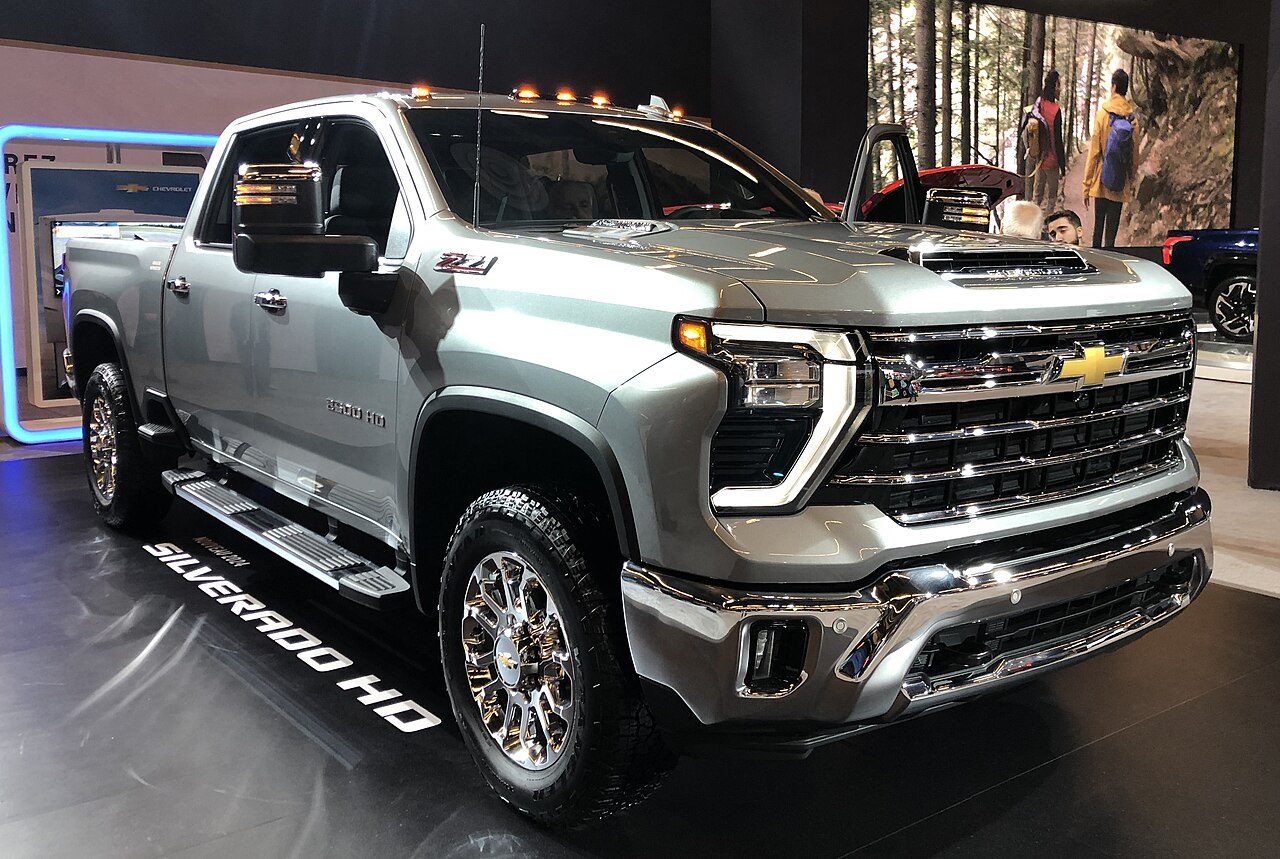
Specs
| Cylinders | 8 |
|---|---|
| Transmission | Automatic · 6 speeds |
| Drivetrain | 4x4 |
| Dimensions (L × W × H) | 5,830 × 2,030 × 1,980 mm (229.5 × 79.9 × 78.0 in) |
| Wheelbase | 3,780 mm (148.8 in) |
| Curb weight | 2,778 kg (6,124 lb) |
| Body style | Standard Pickup Trucks 2WD |
Dimensions and weight: median of the 36 versions in Canada's official specifications (NHTSA vPIC). Each version differs slightly.
For sale in United States
Other Chevrolet Silverado for sale in United States
Fuel economy (MPG)
🇺🇸 Local dataBy version
| Engine | Transmission | Drivetrain | City | Highway | Combined |
|---|---|---|---|---|---|
| 4.3 L 6-cylinder | Automatic · 4 speeds | 4x4 | 14 MPG | 18 MPG | 16 MPG |
| 4.3 L 6-cylinder | Automatic · 4 speeds | Rear-wheel (RWD) | 15 MPG | 20 MPG | 17 MPG |
| 4.8 L 8-cylinder | Automatic · 4 speeds | 4x4 | 13 MPG | 18 MPG | 15 MPG |
| 4.8 L 8-cylinder | Automatic · 4 speeds | Rear-wheel (RWD) | 14 MPG | 19 MPG | 16 MPG |
| 5.3 L 8-cylinder | Automatic · 6 speeds | 4x4 | 15 MPG | 21 MPG | 17 MPG |
| 5.3 L 8-cylinder | Automatic · 6 speeds | Rear-wheel (RWD) | 15 MPG | 21 MPG | 17 MPG |
| 5.3 L 8-cylinder | Automatic · 6 speeds | Rear-wheel (RWD) | 15 MPG | 22 MPG | 18 MPG |
| 6.0 L 8-cylinder hybrid | CVT (continuously variable) | 4x4 | 20 MPG | 23 MPG | 21 MPG |
| 6.0 L 8-cylinder hybrid | CVT (continuously variable) | Rear-wheel (RWD) | 20 MPG | 23 MPG | 21 MPG |
| 6.2 L 8-cylinder | Automatic · 6 speeds | 4x4 | 12 MPG | 18 MPG | 14 MPG |
| 6.2 L 8-cylinder | Automatic · 6 speeds | Rear-wheel (RWD) | 12 MPG | 18 MPG | 14 MPG |
EPA figures for each version sold in the U.S.
Recalls
It may not apply to vehicles sold in your country. Check with your VIN at the source.
Details
Issue: On certain vehicles, long-term exposure to high absolute humidity and temperature, combined with high temperature cycling, may eventually degrade the propellant contained in the passenger-front airbag. This could cause the airbag to deploy with more force than normal. If the airbag inflator ruptures, fragments could be propelled toward vehicle occupants or cause damage to the airbag assembly, preventing its proper function. Safety Risk: If the vehicle is involved in a crash requiring an airbag deployment, the airbag inflator could rupture and create a risk of injury. Corrective Action: General Motors will notify owners by mail and instruct you to take your vehicle to a dealer to replace the passenger-front airbag. Note: The Canadian climate results in the propellant degrading slowly. This recall is being conducted as a precaution to address future risk. It is expected that all airbag inflators will be replaced before their function would be affected.
Details
Issue: Long-term exposure to high absolute humidity and temperature, combined with high temperature cycling, may eventually degrade the propellant contained in the passenger-front airbag. This could cause the airbag to deploy with more force than normal. If the airbag inflator ruptures, fragments could be propelled toward vehicle occupants or cause damage to the airbag assembly, preventing its proper function. Note: This recall is for vehicles that were originally sold or ever registered in certain areas of the United States that experience high or moderate levels of heat and humidity, and that were subsequently imported into Canada. Affected states: American Samoa and the U.S. Virgin Islands, Alabama, Arizona, Arkansas, California, Delaware, District of Columbia, Florida, Georgia, Guam, Hawaii, Illinois, Indiana, Kansas, Kentucky, Louisiana, Maryland, Mississippi, Missouri, Nebraska, Nevada, New Jersey, New Mexico, North Carolina, Ohio, Oklahoma, Pennsylvania, Puerto Rico, South Carolina, Tennessee, Texas, the Northern Mariana Islands (Saipan), Virginia and West Virginia. Safety Risk: If the vehicle is involved in a crash requiring an airbag deployment, the airbag inflator could rupture and create a risk of injury. Corrective Actions: General Motors will notify owners by mail and instruct you to take your vehicle to a dealer to replace the passenger-front airbag inflator. Note: This recall is being conducted as a precaution to address future risk. It is expected that all airbag inflators will be replaced before their function would be affected.
Details
This Safety Improvement Program was replaced by Transport Canada Recall No. 2020-591. General Motors Canada is conducting a voluntary Safety Improvement Program involving passenger airbag inflators in vehicles that were originally sold or ever registered in certain areas of the United States that experience high or moderate levels of heat and humidity, and that were subsequently imported into Canada. Dealers will replace the passenger inflator on affected vehicles. Owners who believe their vehicles may have been originally purchased or registered in the states listed below should contact a General Motors dealer. This action is not being conducted under the requirements of the Motor Vehicle Safety Act. Affected states: American Samoa and the U.S. Virgin Islands, Alabama, Arizona, Arkansas, California, Delaware, District of Columbia, Florida, Georgia, Guam, Hawaii, Illinois, Indiana, Kansas, Kentucky, Louisiana, Maryland, Mississippi, Missouri, Nebraska, Nevada, New Jersey, New Mexico, North Carolina, Ohio, Oklahoma, Pennsylvania, Puerto Rico, South Carolina, Tennessee, Texas, the Northern Mariana Islands (Saipan), Virginia and West Virginia.
Details
On certain vehicles, a defect in the ignition lock cylinder could cause the key to stick in the "start" position if the vehicle interior temperature is sufficiently high. If the vehicle is operated in this condition and the interior temperature cools or the vehicle goes off-road or is subjected to some other jarring event, the key could move out of the "start" position, rotate past the "run" position and into the "accessory" position. If this were to occur, engine power, power steering and power braking would be affected, increasing the risk of a crash causing injury and/or damage to property. The timing of the key movement out of the “run” position, relative to the activation of the sensing algorithm of the crash event, may also result in the airbags not deploying in a subsequent collision, increasing the risk of injury. Correction: Dealers will inspect the steering column for identifying information and replace if necessary.
Details
On certain vehicles equipped with an optional dual batteries, the owner's manual does not specify a maximum amperage rating for the auxiliary battery to the trailer wiring harness. If the circuit is overloaded, a fusible link may fail and could damage adjacent components, potentially resulting in a fire and increasing the risk of injury and/or damage to property. Correction: Dealers will install an 40 amp inline fuse and provide an owner's manual supplement containing maximum amp rating information. Note: Owners are advised not to use equipment that exceeds a 40 amp draw on the auxiliary battery trailer wiring.
Details
On certain vehicles, the intermediate steering shaft attaching bolts may not have received adequate tightening torque during vehicle assembly. This could allow the joint to separate, resulting in a loss of steering capability. A loss of steering control could result in a crash causing property damage and/or personal injury. Correction: Dealers will tighten the intermediate steering shaft bolts to specifications.
Details
On certain vehicles, the rear axle cross pin was improperly heat treated (during the manufacturing process) and could fracture and become displaced within the rear differential. As a result the driver may hear a banging noise emanating from the rear axle. Also, if the pin shifts out of position it could create an interference and cause the rear axle to lock. This could cause a loss of vehicle control, which could result in a crash causing property damage and/or personal injury. Correction: Dealers will inspect and, if necessary, replace the rear axle cross pin.
It may not apply to vehicles sold in your country. Check with your VIN at the source.
Consequence · Remedy
The inflator of the front passenger airbag may deteriorate due to repeated changes in environmental temperature and humidity, which could cause abnormal pressure rise in the inflator and potentially lead to the inflator container breaking during airbag deployment.
Replace the front passenger airbag inflator with a remedial part for all vehicles.
Translated automatically from the RDW's Dutch text. The original is at the source.
It may not apply to vehicles sold in your country. Check with your VIN at the source.
Consequence · Remedy
The propellant in the inflating mechanism may deteriorate after prolonged exposure to high humidity and temperature fluctuations, causing the inflating mechanism to potentially rupture during activation. If an inflating mechanism ruptures, metal pieces from the airbag may be propelled into the interior at high speed, causing serious or fatal injury to vehicle occupants.
Dealers will replace the inflating mechanism of the front passenger airbag.
Consequence · Remedy
A contact lock element is manufactured with an outer diameter that is too large. As a result, the ignition key may get stuck in the 'start' position. If the temperature in the car drops or the car shakes, the ignition lock may accidentally turn to the accessory position. If the key shifts to 'accessory', the engine, power steering, and brake assist may fail. In a collision, the airbags may not deploy.
The manufacturer is recalling the affected vehicles. Measures will be taken to rectify the defect. The vehicle owner is requested to make an appointment with an authorized brand dealer. They will inspect the vehicle and replace the ignition lock housing if necessary.
2011 vs. other Silverado years
🇺🇸 Local dataOwner complaints and recall campaigns on record at NHTSA for each model year. Fewer complaints can also mean fewer cars sold or a newer car.
Questions
- What engine does the 2011 Chevrolet Silverado have?
- The 2011 Chevrolet Silverado came with 5 engines: 4.3 L 6-cylinder, 4.8 L 8-cylinder, 5.3 L 8-cylinder, 6.0 L 8-cylinder hybrid, 6.2 L 8-cylinder.
- What is the fuel economy of the 2011 Chevrolet Silverado?
- It gets 14 to 21 MPG combined depending on the engine, per the EPA.
- Does the 2011 Chevrolet Silverado have recalls?
- 7 recall campaigns are on record. The latest concerns Airbag (2021-02-05).
Other years
Other models by Chevrolet
Do you own a 2011 Silverado?
Post it for free and reach buyers who are already looking at this exact car.
- Free, with no commission
- About three minutes
- Your listing shows up on this page